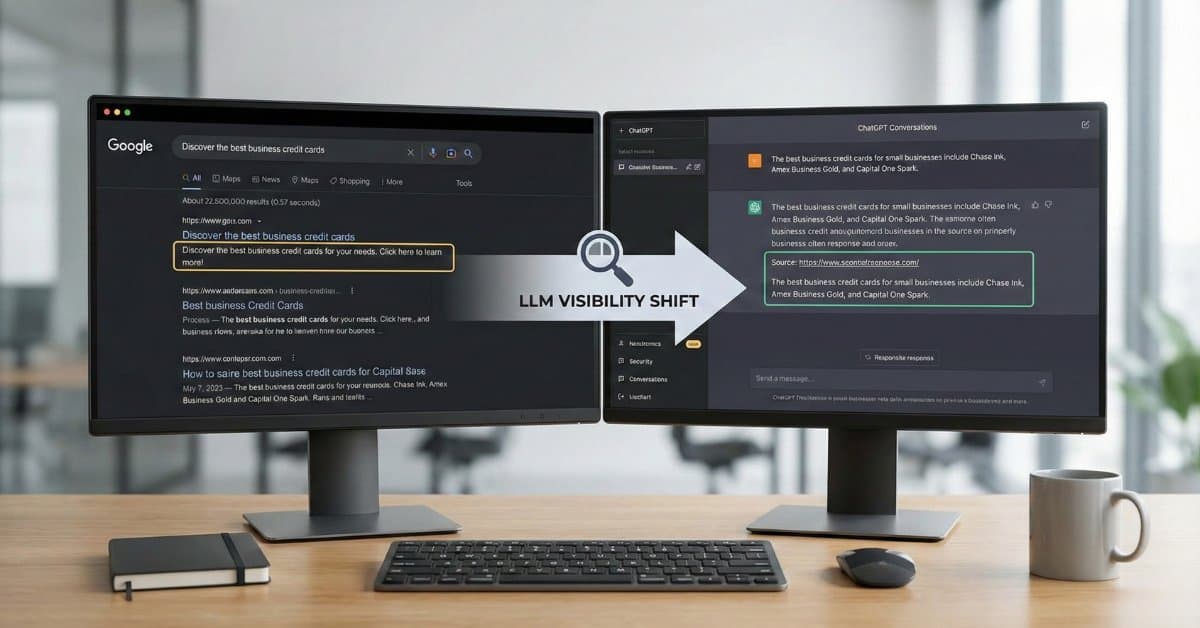
The rules that work on Google do not apply the same way in ChatGPT. When someone asks it a question, it sends the question to a search engine and gets back a ranked list of results. Each result carries a title, a web address and a short summary. Opening every page would cost too much, so ChatGPT opens only the results that seem to answer the question most clearly, from sources that look trustworthy. That means a page is judged on a line or two of text before anything on it is read.
A large analysis of the pages ChatGPT names as sources points the same way. Pages with clear titles that matched their topic, and summaries that described the page, were named more often. Pages with vague wording, or wording stuffed with search keywords, were named less.
Each page carries a short description of itself, written by the site and known as the meta description. Sites treat it as a prompt to click, but it also helps shape the summary ChatGPT reads. When it clearly answers a person’s likely question, the page is more likely to make the short list that gets read. When it does not, the page can lose out, even if its content is strong.
The trick is to spoil the answer instead of teasing it. Whoever writes the description starts from the exact question someone would ask before landing on the page, then states the answer plainly. “Discover the best cards for your needs” becomes “The best business credit cards for small businesses include X, Y, and Z.” One practitioner guide on how ChatGPT and similar systems choose what to show gives concrete examples of this answer-first style. It argues that this makes it easier for AI systems to pull useful information straight from the description.
Teaser lines come from older search habits, where intrigue might win a click. At the summary stage, a polished promotional line that never confirms the page is relevant tends to lose to a clean, direct answer. Rewriting one costs little, and the effect on whether a page gets read and cited can be large.