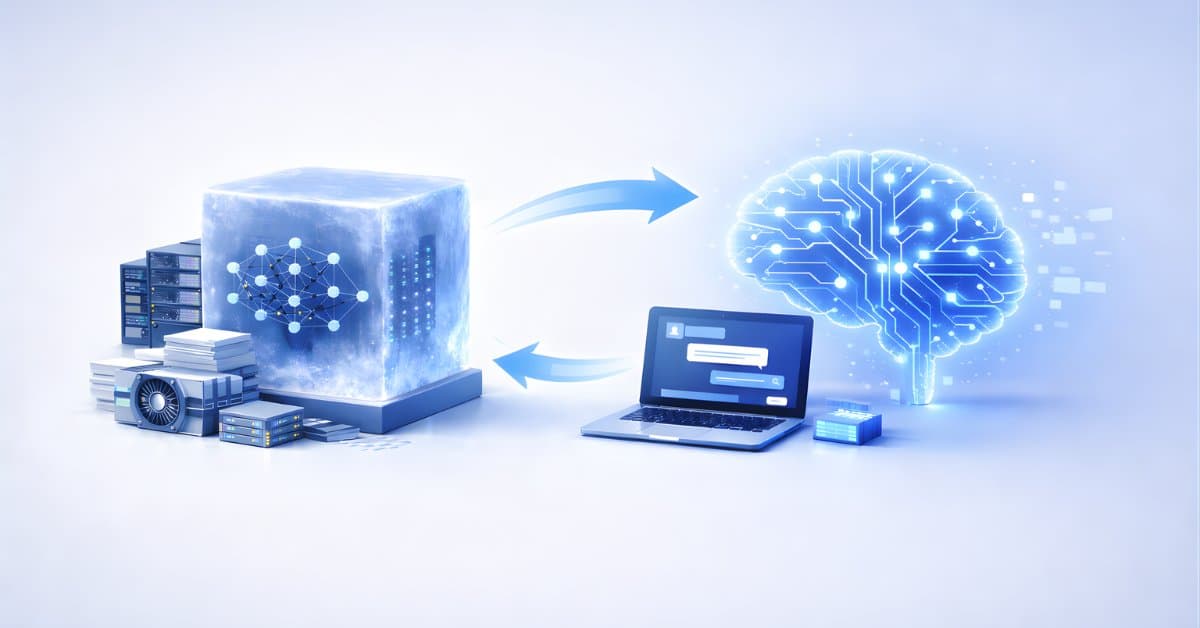
Many people imagine AI going back through everything it has ever learned each time someone asks it a question. AI models do not work that way. Two separate stages sit behind every answer: one where the model learns, and one where it writes a reply. The two happen at different times and serve different purposes, and the timing explains how an answer can sound right and still be wrong.
Training happens before anyone uses the model. The model works through huge amounts of text to learn patterns in language, such as how words relate, how ideas connect and how sentences tend to unfold. Once training ends, the model stops learning in the ordinary sense. In everyday use, it runs without updates, so it does not change itself while it chats or learn from the conversation.
Answering is what happens when someone types a request and hits send. The model takes that input and writes a reply on the spot, using only what it learned in training. That limit shows when someone asks about something that happened after training ended. The model cannot produce new facts from inside itself, yet it may still give a fluent answer. How smoothly an answer reads does not show whether it is accurate or current.
Whether the model is enough on its own depends on the task, and a task that rests on stable patterns may need nothing more. A model can still be useful for drafting, summarising, combining ideas and reasoning over material it has been given. Where the latest facts decide the outcome, or the information keeps changing, the model alone is not a reliable source.
Those tasks need current information supplied from outside the model. Someone can paste the relevant material into the request, or the system can look up outside documents and pull them in while the model answers. The alternative, updating the knowledge stored inside the model, in the numerical settings shaped during training, is difficult. A team that treats a frozen model as a live information system raises the risk that confident but outdated answers enter its research, analysis and decision support.