Most public claims of AI “intelligence” rest on exams and tests that have been discussed and practiced openly for years. Models can look brilliant when they match a familiar pattern, reuse a known method or restate a well-traveled solution. Leaders then assume the same performance will hold on new work inside their own organizations. A paper called First Proof tests where that assumption breaks, using math problems whose answers could not be looked up online.
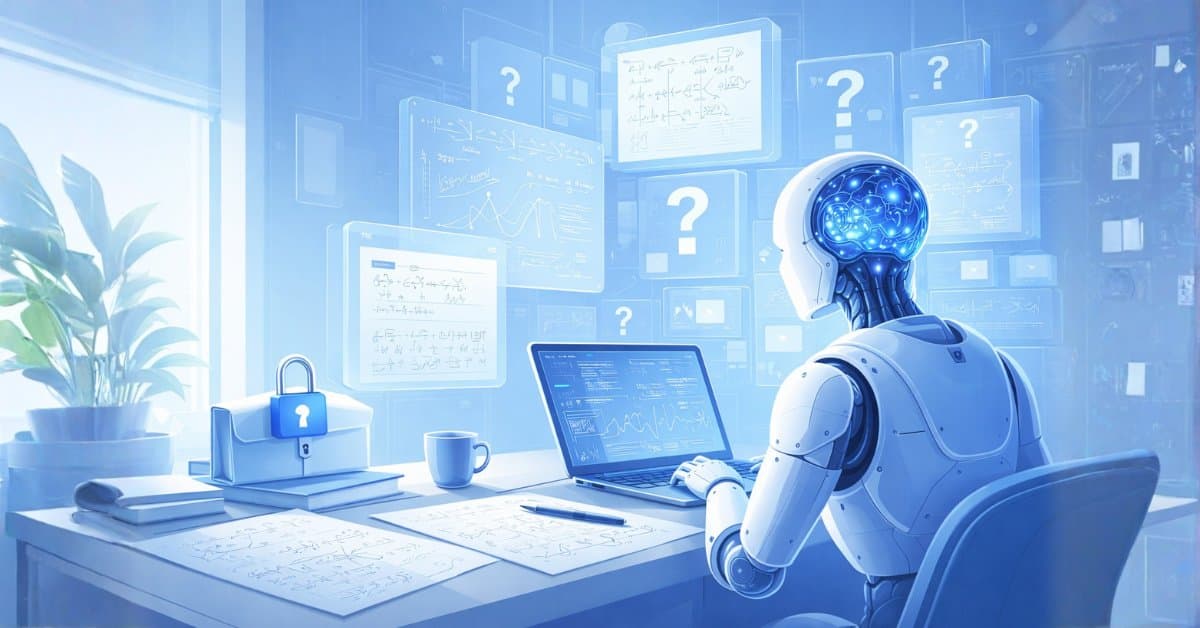
Eleven mathematicians contributed ten questions drawn from their own research, which they say had not been shared publicly before. They posted their answers on the project’s website in encrypted form, locked so nobody could read them before a planned release on 13 February 2026.
First Proof covers a narrow part of research and leaves out the earlier creative work of choosing the right question or inventing new theory. It tests whether AI can prove a clearly stated claim once the question is understood and the field’s established definitions and tools are known. Each proof, a chain of logic that can be checked, runs about five pages or less, the authors say. Many of the questions are stepping-stone results inside a larger piece of work, picked because the main results were beyond what AI systems could tackle at the time.
The rules were strict on purpose. In early tests, the team gave two leading AI systems, GPT 5.2 Pro and a version of Gemini 3, one attempt per question with no back-and-forth. Under those conditions, the authors concluded, the best publicly available systems struggled to answer many of the questions.
A model can understand a question, even restate it cleanly, and still fail to produce a correct proof. At work, that looks like output that reads well but falls apart when someone checks it, reviews it or applies it to an unusual case. Public tests alone cannot show where that happens. A company can find out with the same method, using fresh internal problems, private answer keys and human grading. The cost of a miss comes after the draft, in the correction, delay and risk that follow when a plausible answer is wrong.