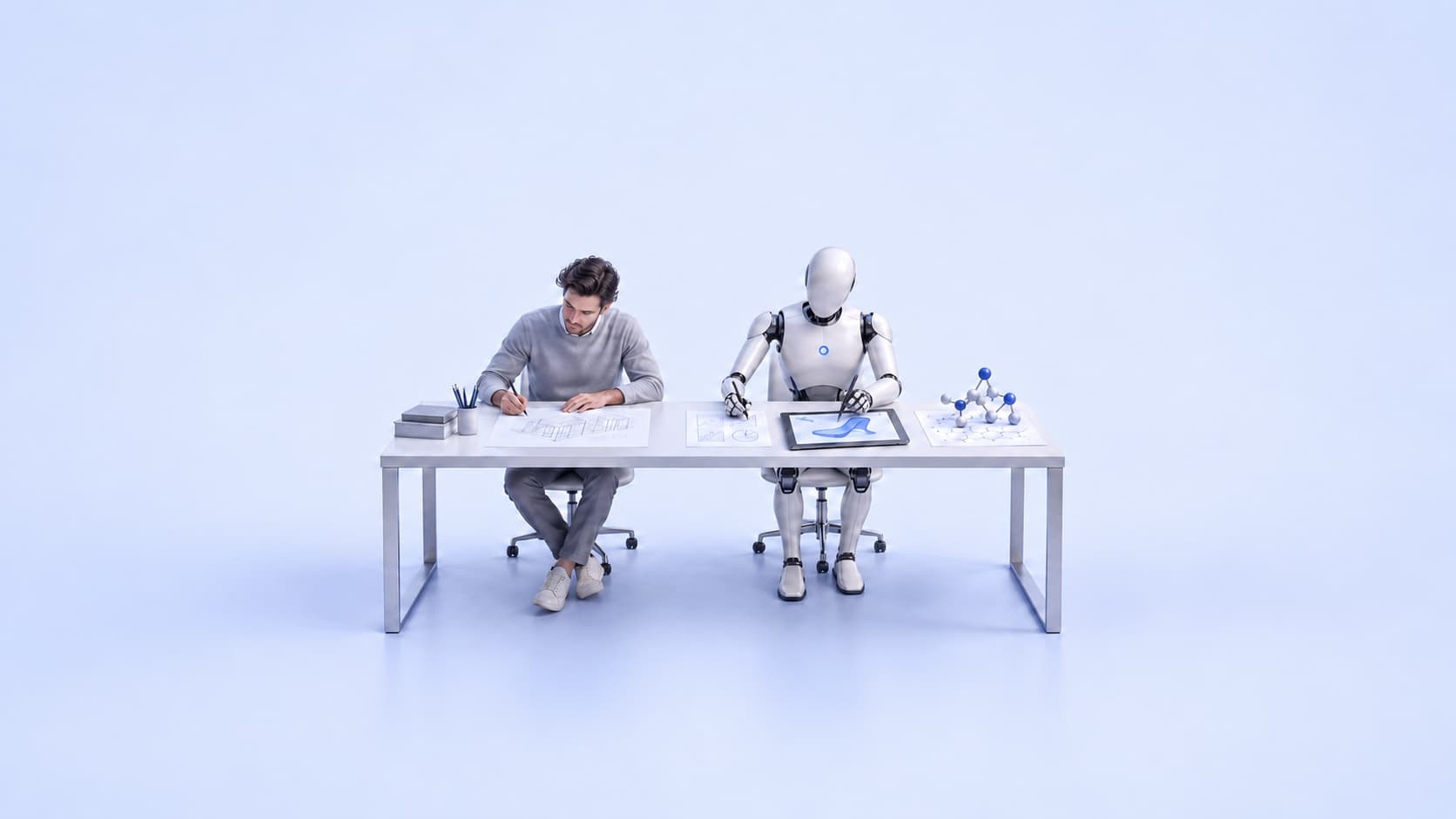
Executives tracking AI tend to watch how big the next language model gets, the kind of text-trained system behind chatbots. A paper from researchers at Google, Stanford, Harvard and Princeton looks elsewhere. It argues that the next real leap might already have happened inside a video model built to generate entertaining clips. Nobody designed that model to reason, only to make short videos look convincing.
The paper collects ten perspectives on where general intelligence, the ability to handle many kinds of tasks, comes from. One belongs to Robert Geirhos, a researcher at Google DeepMind, who points to Veo 3, Google’s video generator, as his evidence. Geirhos and his coauthors found that Veo 3 can trace the edges of objects and separate a picture into its parts. It can also recognize what an object is used for and find its way through a maze. None of those tasks were part of its training.
His case starts with a flaw in older image systems. A system trained to sort photos into categories takes a shortcut, learning to call anything grey and leathery an elephant without learning what an elephant looks like. A video generator has no such shortcut, because wrong lighting or shadows make a clip look fake to any viewer. To get a whole scene right, it has to learn far more about the physical world, such as how light falls and shadows shift. That extra learning, Geirhos argues, is where the unassigned abilities come from.
Language models set the precedent. AI for images and AI for text used to need a separate model for each task. Then GPT-3, an earlier language model, broke the pattern. Nobody trained it on each task, yet new abilities appeared once the model and its training data grew large enough. Geirhos sees the same thing happening in video.
The contributors disagree on the route. One perspective, tied to Harvard, argues that visual intelligence needs a body that can act and feel physical feedback. Another says a system must keep learning after training ends. By their own account, the abilities they document are scattered across different models and demonstrations, not yet combined into one system anyone would call generally intelligent.
All ten still agree that general intelligence does not have to begin with language. Vision came first. Camera-type eyes date back roughly half a billion years, long before written or spoken language existed.