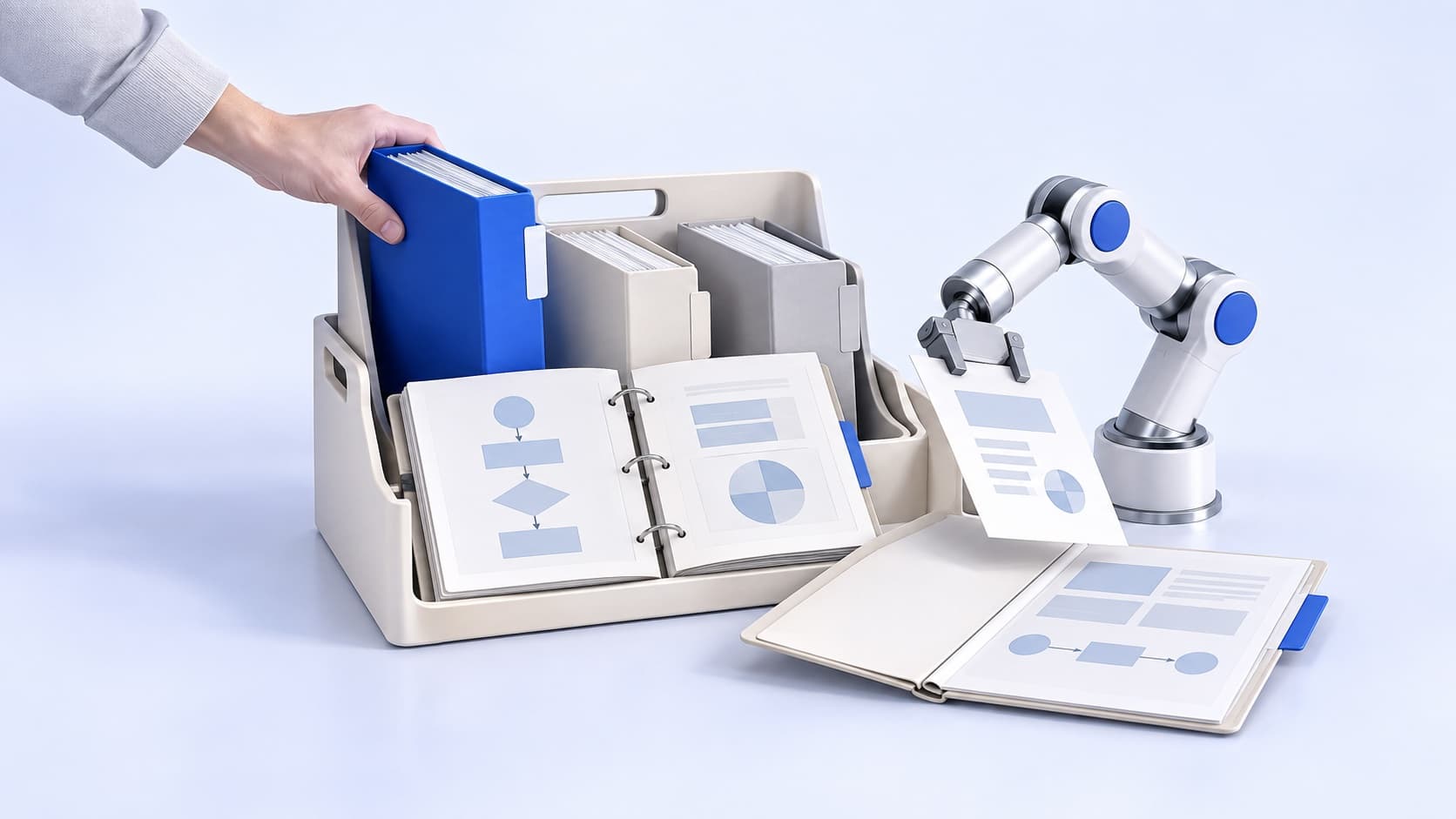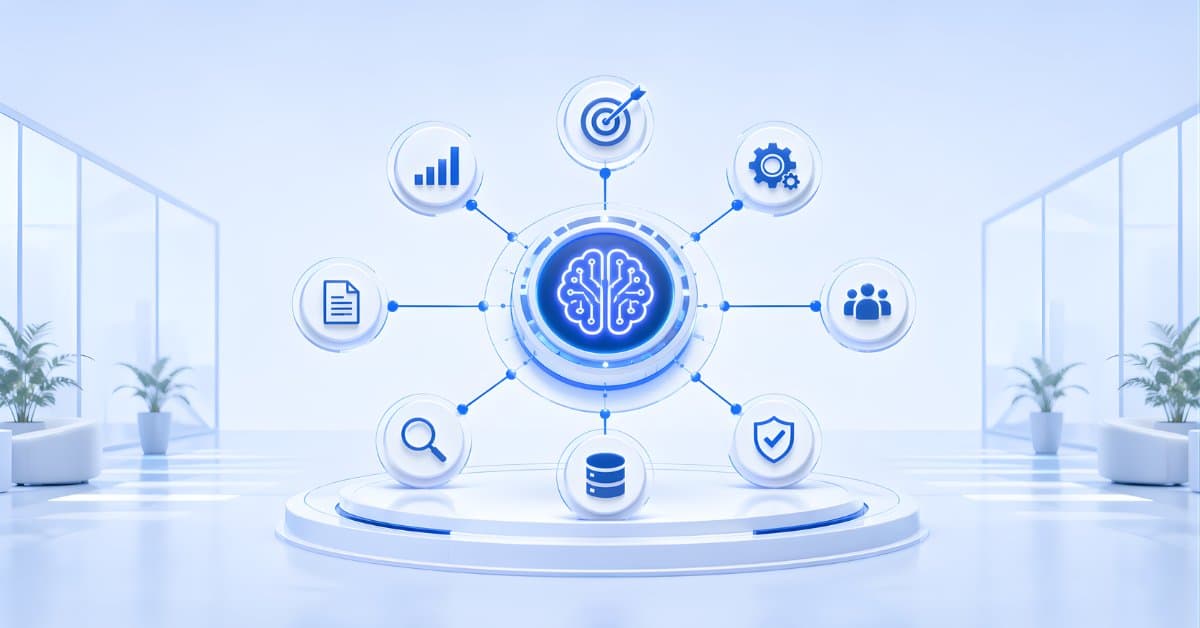
AI models keep getting more capable, yet most businesses cannot put them to real work. The models cannot see the information the business runs on, so they fall back on generic drafting. Research on models that look up outside documents before answering found their answers more specific and factual. So the first step is a knowledge base, a set of documents that gives AI the context it needs to work inside the business.
Anything important to even one person in the business can become important for the AI to reach. Still, most businesses do not need hundreds of files to start. A compact set covers a company overview, a full description of products and services, and content guidelines. It also includes a list of important website pages, a competitor analysis, a brand voice and style guide, and anything else the AI needs again and again. Without that material, AI ends up needing more supervision instead of saving time.
How the files are organised is as important as what they say. A practical choice is markdown, a plain text file format. Each file gets a clear, descriptive name and a short description of what it contains and when to use it. That makes it easier for the AI to match each file to the right task, instead of treating the whole business as one mass of text.
Structure matters more as the collection grows. Most businesses will end up with dozens of files, some of them long, and AI cannot pull all of that into every task. One study found that models can miss relevant information buried deep in long inputs, so a giant pile of documents is not enough on its own.
The files also need a clear line between internal information and material the business would willingly publish. AI often drafts customer emails, website copy and other public content. If private notes, internal assumptions and public messaging sit in one mixed pool, the AI is more likely to pull from the wrong source. Keeping them apart gives teams more control over what appears in public.
A workable setup keeps the master documents in Google Docs and uploads them into a project in Claude, Anthropic’s AI assistant. The same documents also work in Google’s AI tool NotebookLM or a ChatGPT Project. The team maintains one version of each file, instead of a separate copy for every tool.