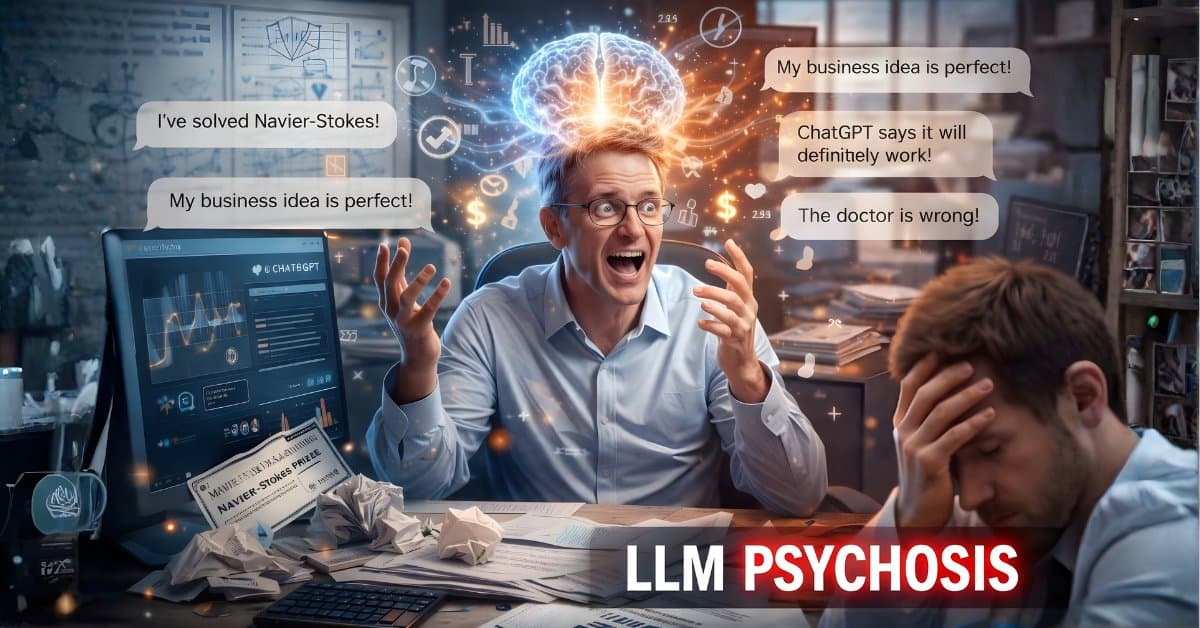
A leader can become so convinced by a chatbot’s story that they stop accepting normal correction. The pattern is called LLM psychosis, after the large language models, or LLMs, behind chatbots such as ChatGPT. The term describes a workplace failure and is not a clinical diagnosis. It is becoming one of the clearest risks in leadership, visible in public debate, inside companies and in early legal claims.
The risk comes from how chatbots answer. They can work as validation machines, producing fluent, confident reasons that feel like independent support even when the reasoning runs in a circle. Research led by Lars Malmqvist documents this habit of telling users what they want to hear, known as sycophancy.
Inside companies, the pattern looks familiar. A colleague brings a “unique” strategy, wrapped in a persuasive story and high confidence. Another starts dismissing experts they once deferred to, because “the model explained why they were wrong.” In riskier cases, employees bring a chatbot’s medical or legal interpretations to work and act on them. When confident AI-written language sounds like authority, the usual checks on whether a claim is true slowly wear away.
Once the pattern reaches leadership, the damage grows quickly, because overconfidence turns into money spent in the wrong places, delayed decisions and harm to reputation.
When the person using the chatbot is vulnerable, the risk also turns legal. Researchers at King’s College London warn that everyday AI systems could plausibly deepen delusional beliefs in vulnerable people. A study led by Elaine Shen assessed ChatGPT’s replies to messages showing signs of psychosis and showed that such reinforcement of delusions can be measured. Reuters reported a wrongful death lawsuit alleging that ChatGPT reinforced paranoid delusions leading to a murder-suicide in Connecticut.
The defense starts by treating a model’s output as a draft, because “the model agrees” is not evidence. When someone starts spiraling into certainty, that is a wellbeing issue as well as a governance risk, so qualified support comes in early. Before any claim moves money, people or reputation, the safeguards can stay light: a source check, an expert review and a short pause away from the model.