Project planning is the easiest place to hand more work to AI. Getting started takes one change, bringing AI in before the work starts. Every project already runs on a process. That process gives AI a structure to plug into, so the way of working changes without anyone inventing a new system.
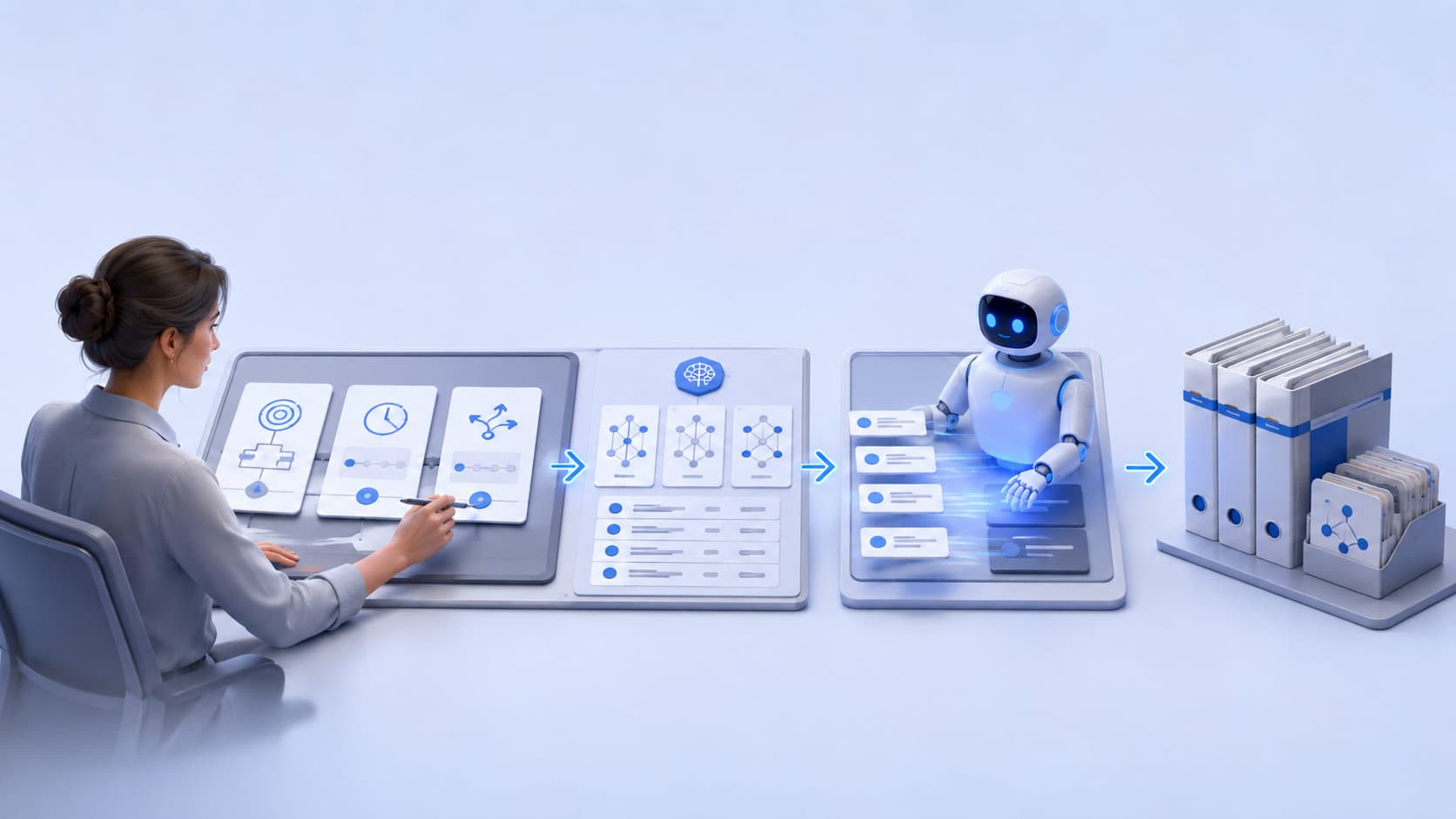
A simple three-step process shows how. The first step names the problem, the second decides how much time the work deserves, and the third chooses the approach. Each step opens a place for AI earlier than most people expect. At the approach step, AI can brainstorm several ways to solve the problem. Comparing them side by side makes the choice deliberate instead of a default to the first idea.
With the approach locked, AI can break the project into every task the work needs. Each task should be specific enough to work as an instruction, ready for a person or for AI to carry out. A vague task stalls and waits for more instruction. A sharp one runs as soon as it is sent. The project becomes a list of small, defined jobs instead of one broad goal.
Then the list goes back to AI, which picks out the jobs that belong to it. The reply comes quickly and ends the guessing about where AI fits. A long stretch of work moves off someone’s plate in a single pass.
The real gain hides in the setup. Because AI helped plan the project, the goal and the plan already sit in the same conversation. A cold request starts from nothing. A request inside a planned project starts from shared understanding, which saves explaining the goal again for every task. The planning step pays for the execution step.
After the work is done, a short review checks which tasks AI completed will come up again. Some jobs repeat across every project of the same kind, such as drafting an outline, sorting research or writing a first version of a brief. Each one can be written down as a routine that records how the task gets done well, so nobody has to rebuild the steps from scratch.
When a similar project lands, AI can check the routines against the new task list, and any task that matches one runs straight away. Each finished project adds more routines to the pile, so the next one moves faster.