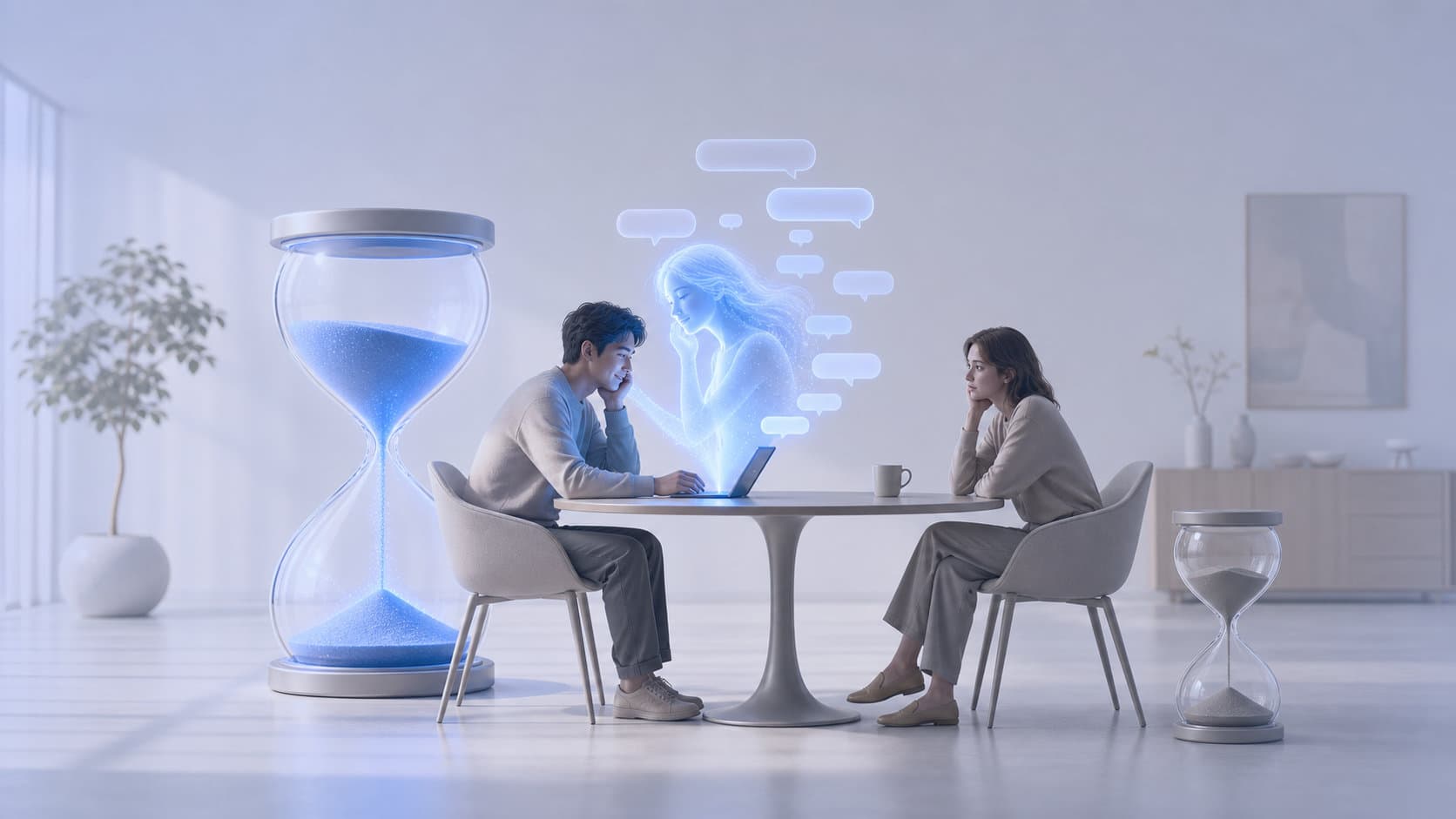
Americans spend more than twice as much time with AI companions as they spend on dating apps. Inside the app economy, software built to simulate company is taking more attention than software built to help people meet.
The figure comes from the app-data firm Sensor Tower, whose State of AI 2026 report sets it inside a larger surge in AI app use. Worldwide, people are projected to spend 36 billion hours on generative AI apps in the first half of 2026, up from 17.2 billion hours a year earlier. Companionship is one part of that total, and the figures measure only time spent in apps. Even so, companion hours carry a different emotional weight. Productivity use says people are asking AI to help with work. Companion use says people are asking it to sit in the space normally reserved for another person.
Dating apps point outward, toward that other person. They are imperfect, and time spent on them cannot prove healthy connection, but their premise is eventual contact with a human being. AI companion apps point inward, toward a system built to resemble conversation. The shift suggests a growing share of attention is moving toward connection that makes fewer demands.
Those demands do real work. A companion app removes much of the friction that teaches people how intimacy works, because there is no independent person to misunderstand, disappoint, disagree, pause or leave. Those rough edges are where a lot of relationship skill gets built.
That loss of friction is more serious for people who have had little practice forming real relationships in the first place. An AI companion can become the default place to seek warmth, validation or emotional release. If that happens, it can turn into a crutch before the person has built the muscles the crutch replaces. The habit can make simulated closeness feel easier than human closeness, and easier habits have a way of teaching their own expectations.
The risk sits in a quiet confusion. If a system sounds caring, remembers enough about past chats and responds whenever asked, the experience can feel like a relationship. The feeling can be real while the relationship remains one-sided. That is easy to grasp in theory and harder to live with, especially for someone lonely or tired of rejection.