A ball rolls across a kitchen counter and drops out of view on the far side. Most AI systems treat the ball as gone. A dog runs around the counter and comes back with it. Nvidia chief executive Jensen Huang uses this small scene to describe the next wave of AI, the wave he expects to benefit the largest industries in the world. In his account, machines first need the everyday physics a pet already has, and robots then carry that knowledge into new factories.
Huang made the case in a conversation at the Hill & Valley Forum. The next wave, he said, requires AI to understand the laws of physics and cause and effect, which he explained with ordinary examples. Tip something over, and it falls. Set a bottle down, and it rests on the table without passing through. He called these abilities common sense about the physical world, which children and pets have and most AI systems, by his account, do not.
The kitchen counter shows the shortfall, because the dog does two things the AI cannot. First it keeps track of the ball after it drops out of sight, a skill Huang calls object permanence. The ball, he said, “didn’t go into another metaverse.” Then the dog plans a route around the counter to reach it.
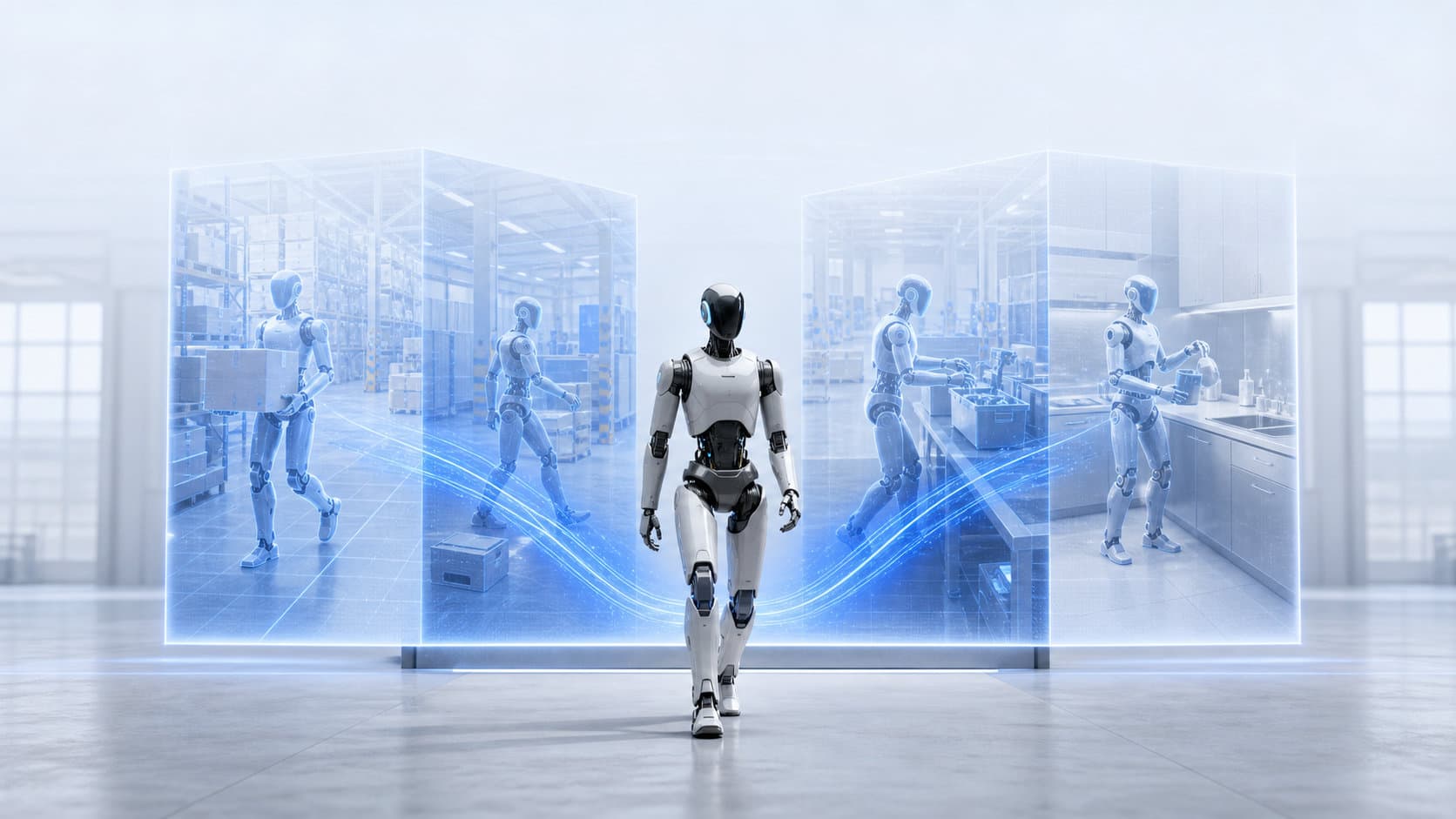
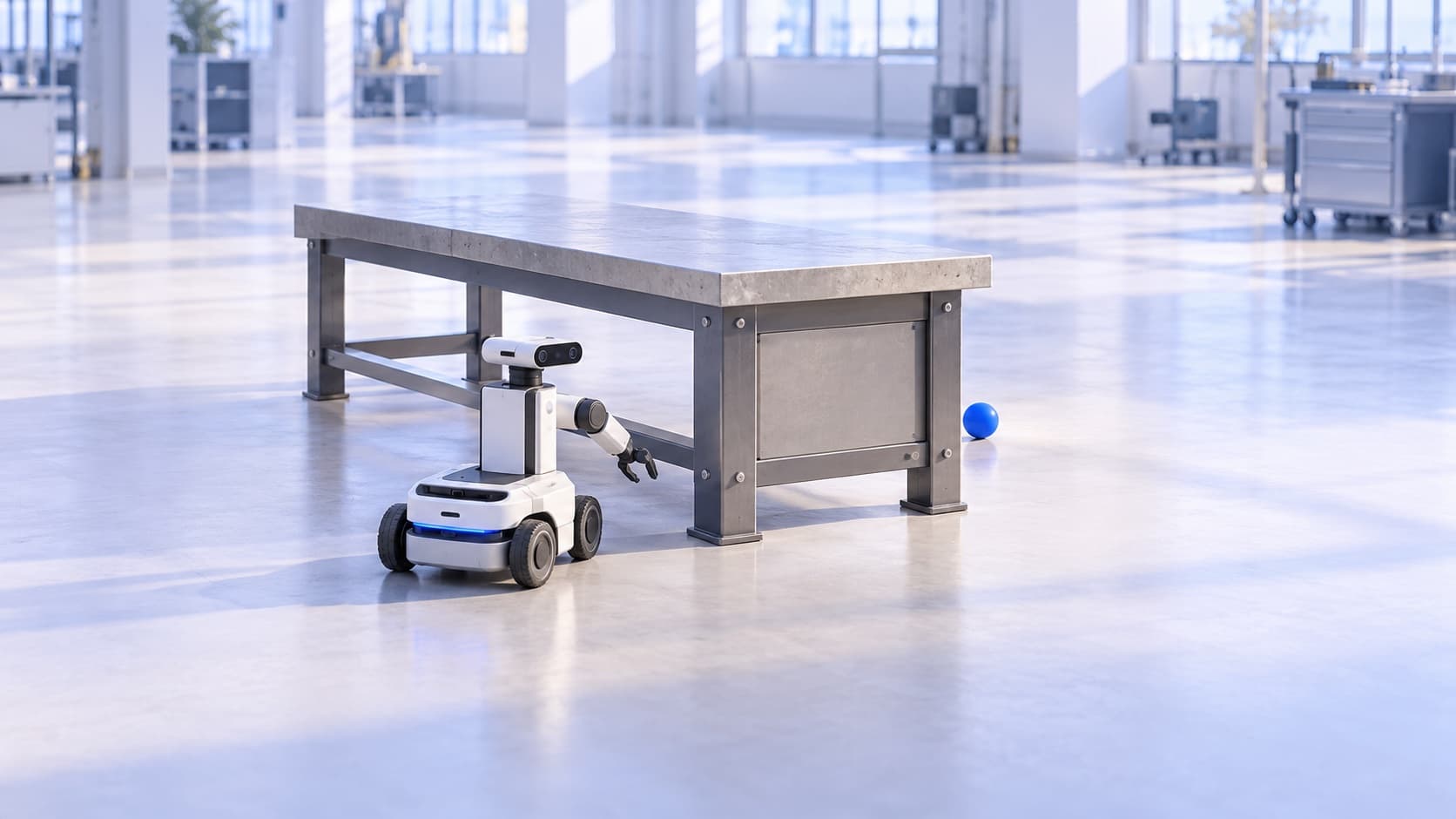
A robot faces the same two steps. In his second scene, a robot needs to reach the far side of a table that blocks the direct path. The robot cannot go through it, so it has to reason about a route around, the move a dog makes chasing a ball. Huang groups all of these skills under one name, physical AI. Put physical AI inside a physical object, a robot, and in his words “you get robotics.”
He ties the timing of robotics to construction, because the United States, he said, is building plants and factories all over the country. His hope for the next 10 years is a new generation of plants and factories that are “highly robotic.” He expects them to help deal with what he called a severe labor shortage all over the world.