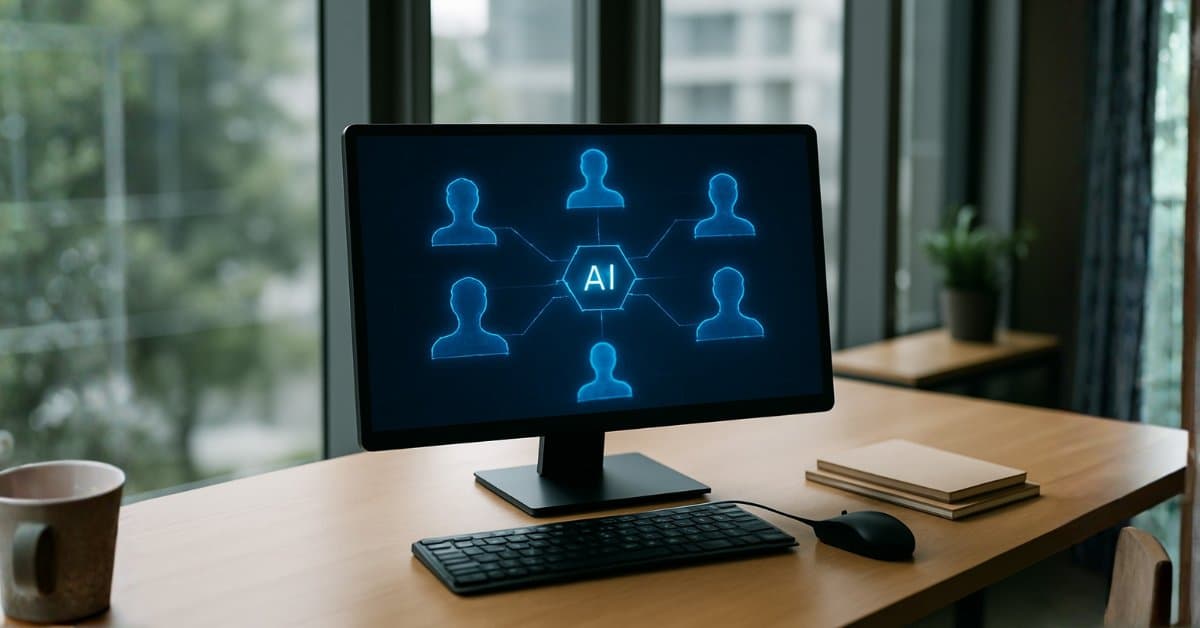
AI agents, software that carries out tasks on its own, are moving past pilot programs. They are turning into coordinated teams that will change how large companies operate, sooner than many expect. In the first wave, each agent does one specialized job, such as clearing repetitive tasks in customer service, finance or internal operations. That already delivers value by freeing people to focus on decisions and customers.
In the second wave, engineering teams are building software that lets several agents work together, share what they know and follow defined rules. The software also responds to security lapses in which agents acting without coordination created weaknesses in company systems. Each agent gets a role, permissions and access to certain data.
The bigger payoff comes when the two waves meet. Specialized agents handle single steps, while teams of agents run workflows from start to finish. Picture one agent capturing a customer’s details, a second checking them and a third preparing the personalized output. Each handoff carries the full context forward, which cuts errors. Run this way, agents work faster and more accurately than they do alone.
Companies already work like this, with clear responsibilities and controlled handoffs. What is new is that agent teams are always available, respond in real time and record everything they do. Because agents behave like a new kind of digital co-worker, they need governance and monitoring. Someone has to decide when a person reviews the work, how each decision is logged and how work passes between people and agents.
If misused, the coordination that makes agent teams fast can also make an attack more powerful. In 2025, Anthropic, an AI company, worked with cybersecurity partners to disrupt what its report describes as the first cyber espionage campaign directed by AI. Malicious agents chose targets, stole data and tried to give themselves wider access to systems, largely on their own.
Early movers that build in access controls and security limits stand to gain lower costs and faster delivery, while laggards may inherit fragmented systems and coordination headaches. By 2026, large companies will likely run dozens of agents across core processes such as sales, finance, support and logistics. Not every project will get that far: research firm Gartner forecasts that over 40% of AI agent projects will be canceled by the end of 2027.