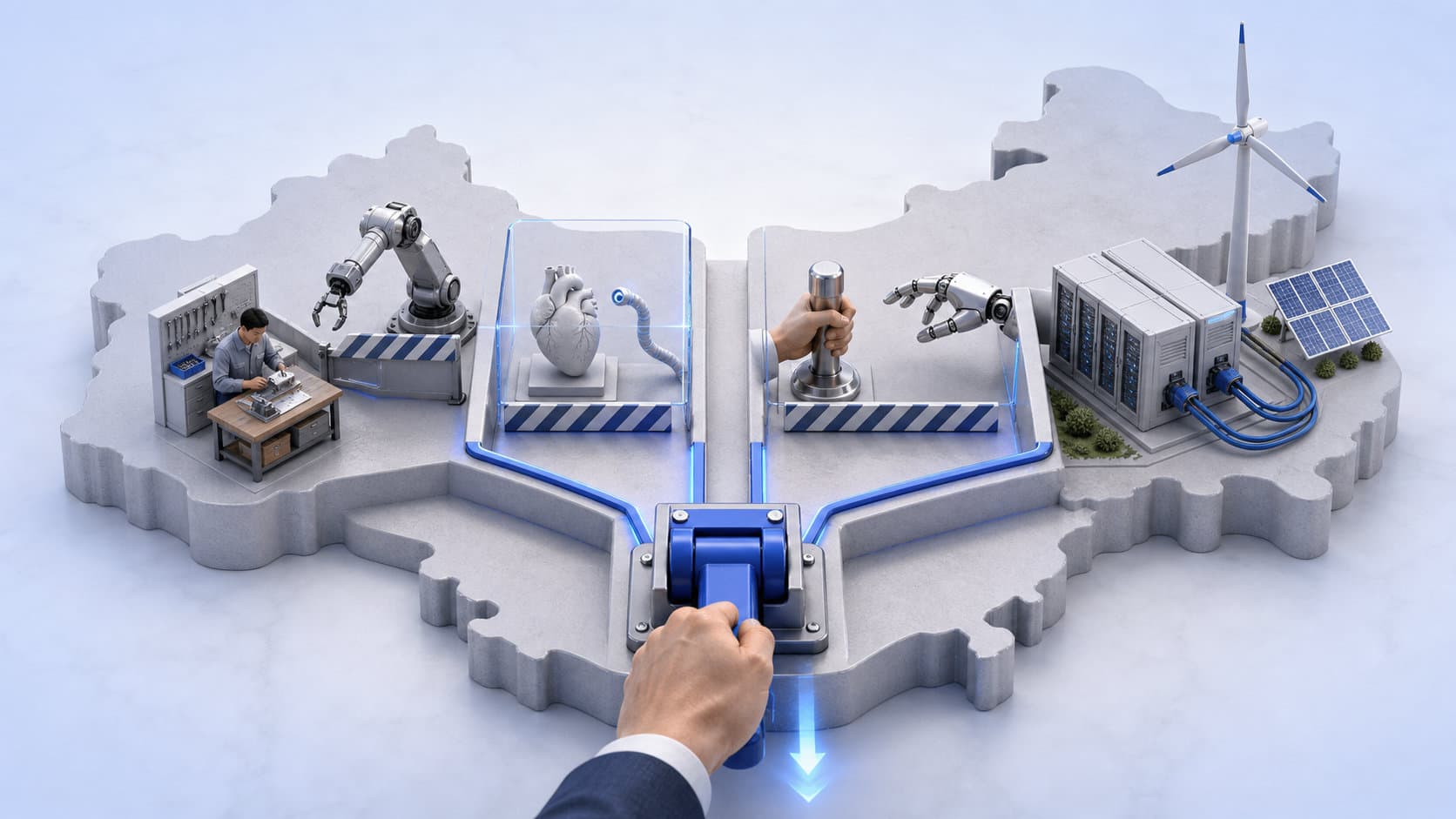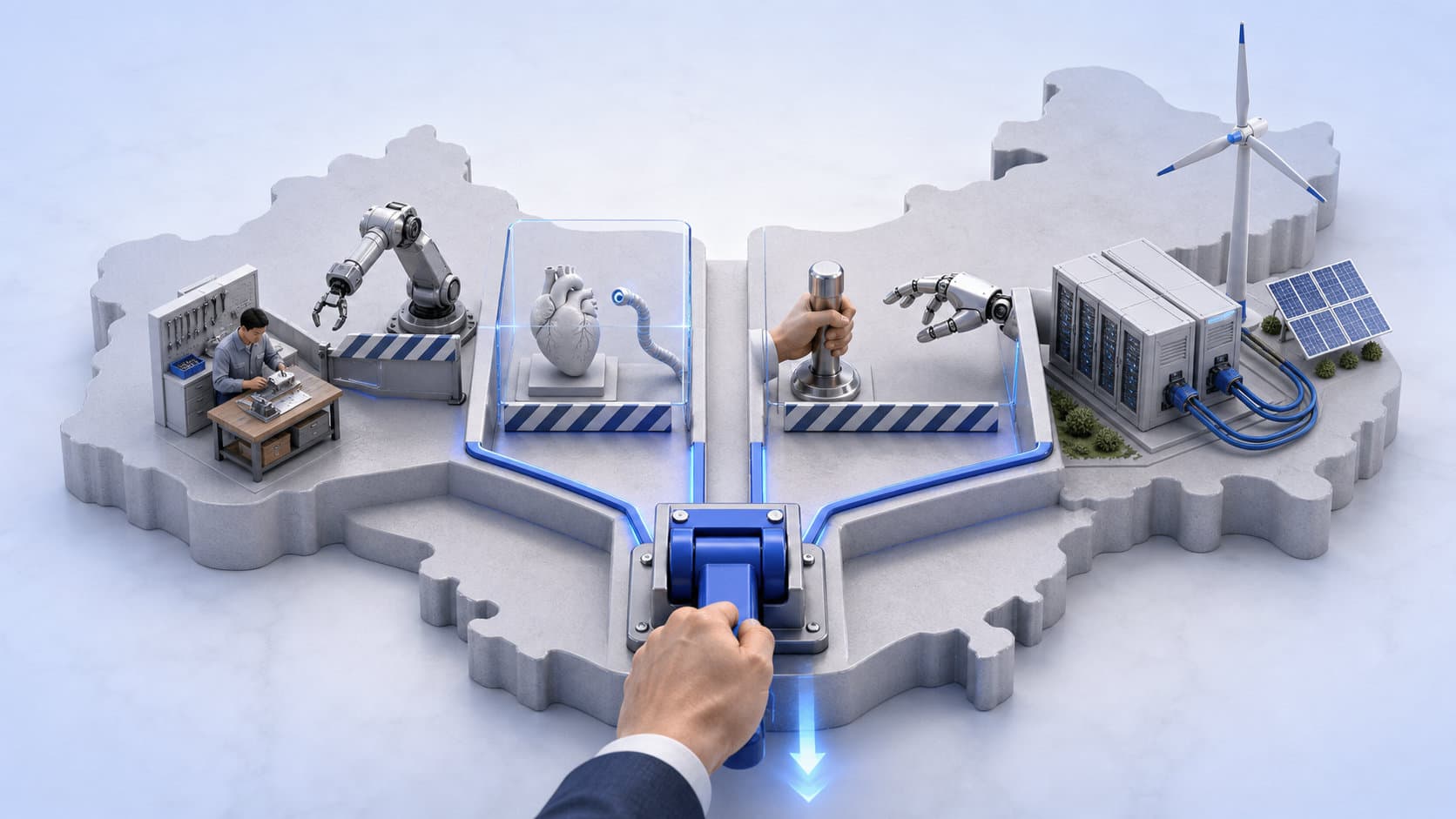
Fire a worker because AI does the job for less, and in China that firing has been overturned in court. Design a chatbot to keep someone emotionally hooked, and the rules block it. Let an AI system make a high-stakes decision without a person signing off, and the rules step in. Build a new data center in one of China’s computing hubs, and the rules set where its power comes from. Elsewhere, almost none of it is restricted.
Those chatbot rules were issued in July 2026 by the Cyberspace Administration of China and four other bodies. Companion apps that simulate emotional interaction must send a reminder after two hours of continuous use. They must also flag signs of dependency with a pop-up and step in when someone shows extreme emotional distress.
AI agents, systems built to act on their own, have their own rules. Under guidelines the same regulator and two other agencies issued in May 2026, developers must sort every decision into three groups. Some decisions belong to the person alone, and others need a person’s sign-off before the agent acts. Only the rest are left to the agent, within limits a person has set.
China’s power rule covers its eight national computing hubs, where new data centers have to get at least 80% of their electricity from renewable power. Builders are increasingly placing them next to the wind and solar farms that supply it, far from the cities where people use the AI they run.
The clearest line was drawn in a Hangzhou labor case. An employee surnamed Zhou, 35, oversaw AI-written answers at a financial technology firm until the company automated his role and offered him a demotion and a pay cut. He refused, was fired and won at labor arbitration, at trial and on appeal. The courts ordered the firm to pay him more than 260,000 yuan, about 38,000 US dollars.
Chinese labor law lets a company end a contract when conditions change so much that the job cannot continue, as in a merger. The judges ruled that a cost-saving choice to swap in AI does not meet that bar. Hangzhou judge Shi Guoqiang told state broadcaster CCTV, “We don’t believe AI technology has reached the point where it can substantially replace human workers.”