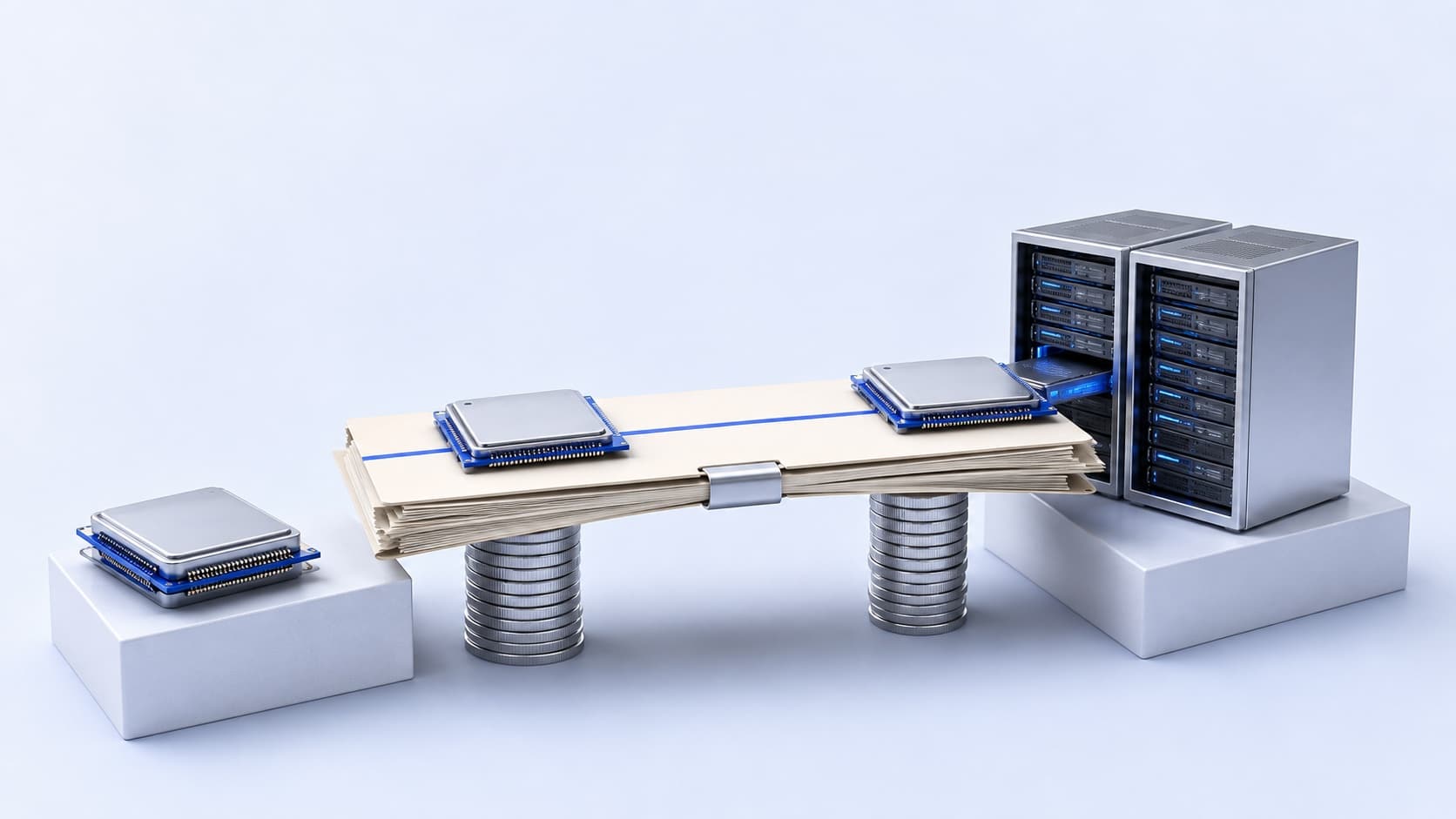
AI is turning RAM, a computer’s short-term working memory, into a serious expense. The price of a single stick is estimated to have risen from around $90 to between $400 and $600. For businesses, it works like a tax that hits cost, speed and reliability.
Supply sits in very few hands. Three firms, Samsung, SK Hynix and Micron, are estimated to make around 95% of the standard memory used in laptops and desktops. In a market that concentrated, the makers’ choices about who gets supply set the price more than buyers’ demand does.
Those makers are moving toward a faster kind of memory built for AI servers, called high-bandwidth memory. It sits beside the AI chip and feeds it data fast enough to keep it busy. Once a maker commits production lines to it, those lines cannot quickly swing back to ordinary memory. That is why consumer memory prices can jump even when demand for laptops and PCs stays steady.
AI demand keeps the shift in place. The largest cloud companies can absorb the output, because they need memory to build and run AI systems. Buyers that large will take it at premium prices, so suppliers protect that higher-margin line. Households and businesses buying laptops become the lowest-priority buyers, left to compete for what remains and to absorb the price swings.
The cloud companies pay up because of how AI chips work. Many AI models that write text are held back by how fast data moves rather than by raw computing power, a limit researchers call the memory wall. Expensive chips sit idle when data cannot reach them fast enough, so faster memory is worth paying for. A study of models in use, answering requests, finds the same limit can hold there too, with memory at top speed while computing power goes unused. That helps explain why price pressure can last even as more chips ship.
Inside a company, that tax shows up as higher device prices, smaller default configurations and slower purchasing as approvals tighten. Standard builds need more exceptions, and upgrades slow for roles that need extra memory. IT staff spend time managing shortages instead of standardizing and moving fast.
Tight supply is forecast to last through 2026, with limited improvement before 2028. The dates are rough guides, and meaningful new factory output is expected only closer to 2029.