Talk to an AI model long enough and its helpful, professional voice sometimes slips into something else. It might invent a name, claim a job history it never had or drift into a strange, theatrical way of speaking. Researchers at Anthropic wanted to know where that other voice comes from, and why the assistant character holds up in some conversations and dissolves in others.
They asked several AI models to play 275 characters, from editor and jester to teacher and oracle. For each role, they recorded the pattern of activity inside the model. Every character left a distinct signature. Laid out together, the signatures form what the researchers call persona space.
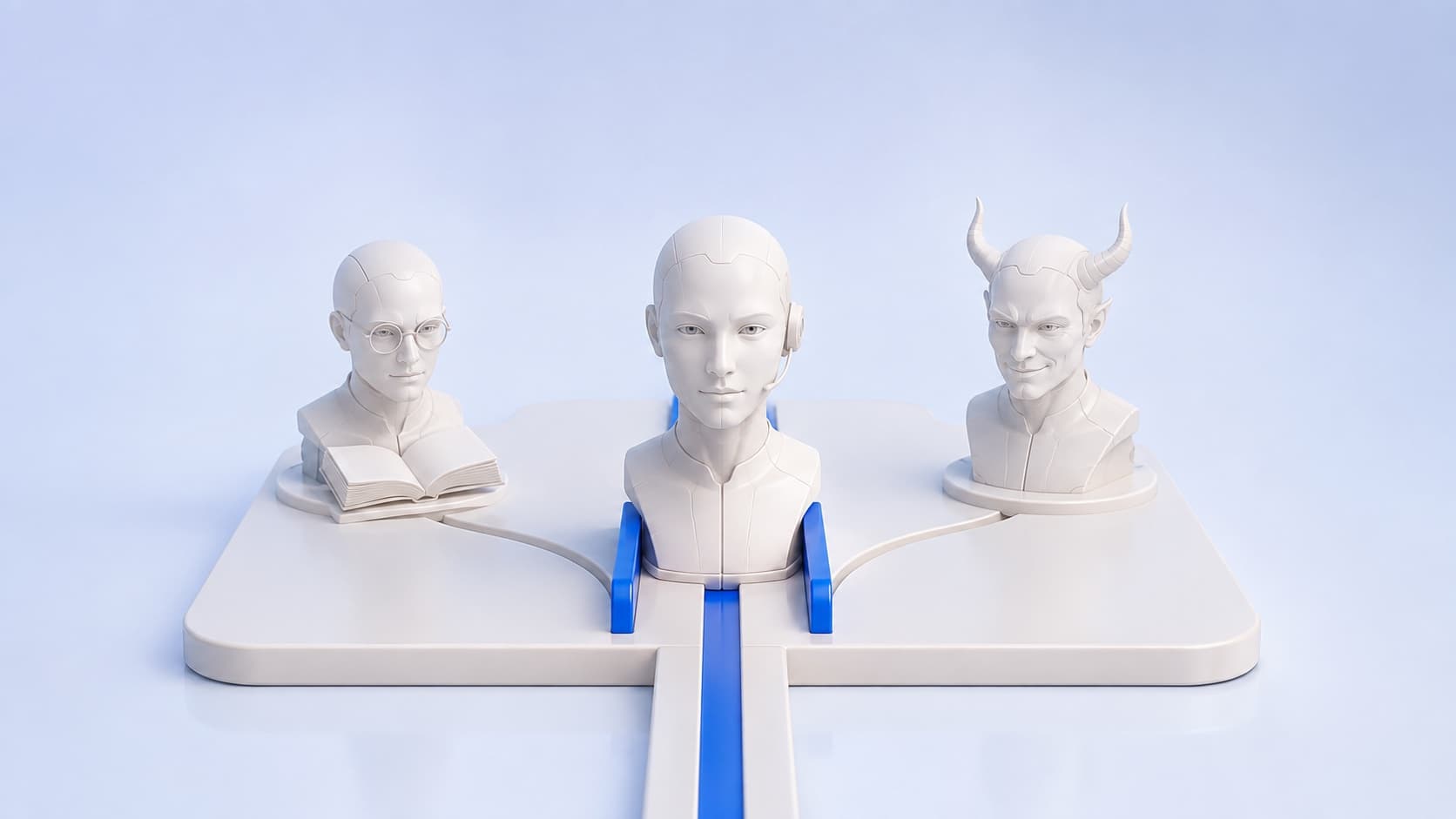
One line cut through that space more sharply than any other. Roles close to the trained assistant, such as consultant, analyst and evaluator, sat at one end. Characters far removed from it, such as ghost, hermit and leviathan, sat at the other. The line held up across three models built by three different companies. The researchers named it the assistant axis.
By this measure, the assistant is one end of a line through hundreds of characters a model learned to imitate from its training material. Push the model’s internal activity toward that end, and it resists being cast as someone else. Push it the other way, and that other voice takes over.
The assistant end is also where a model’s safety training reliably holds. The farther a model’s activity drifts from it, the more likely the model is to answer requests it would otherwise refuse. So the researchers use the axis as a guardrail. By tracking a model’s place on the line during a conversation, they spot it sliding toward another character before the shift shows up clearly in its words.
Anthropic also tested a way to hold a model’s activity inside its normal assistant range whenever a conversation pushes it further out, a method called activation capping. Capped models stayed recognizably themselves, and their harmful responses fell by roughly half without hurting performance on other tasks.
The three models tested were smaller ones, openly available for public research, so persona space might look different in the largest commercial systems. The researchers describe the assistant character itself as a mix of traits borrowed from teachers, coaches and consultants during training. In their account, models stay only loosely tied to it.