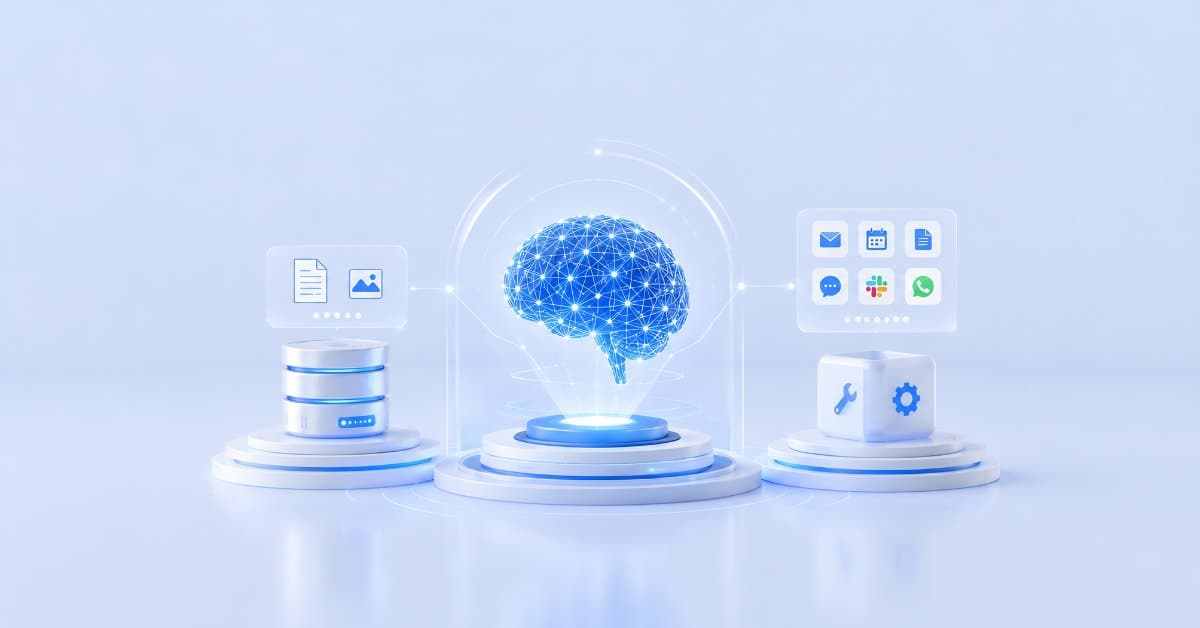
AI agents are easier to understand than the jargon around them suggests. An agent is built from a brain that understands the task, memory that gives it context and tools that let it act.
The brain is the kind of AI most people already know from chat tools such as ChatGPT and Claude, known as a large language model. In an agent, the model reads the request, works out the goal and decides what should happen next.
Even a powerful brain needs context. It does not automatically know the company, the task, the customer or the previous step in a process. Memory supplies that, telling the agent what it is doing, what has already happened and how the work should be handled.
In the simplest setup, memory is written into the agent’s main instruction. That instruction explains the task, the rules, the desired outcome and the limits. It can tell the agent how to handle a customer request, prepare a reply or check a document. Its quality directly affects the quality of the work.
Memory can also pull the right company documents into an answer, using a method called RAG. The agent can then work from policies, customer notes, product documents, process guides or internal records, so its work is grounded in the company’s own information. That makes the agent more useful where accuracy depends on context.
Tools are the third part. They let the agent reach systems outside the chat window, such as Gmail, Google Calendar, Notion, Slack, WhatsApp, customer support tools or internal systems. Without tools, the agent can only respond. With them, it can help complete the work.
That is where agents become useful in daily operations. Many business processes are a chain of small steps: someone reads a request, checks a file, updates a system, sends a message and follows up. A person can ask an agent for the outcome, and it carries out more of those steps in the background.
Agents fit best where a task happens often, takes time and has clear inputs and steps. In that kind of work, the saving comes from cutting the time people spend moving information between apps.