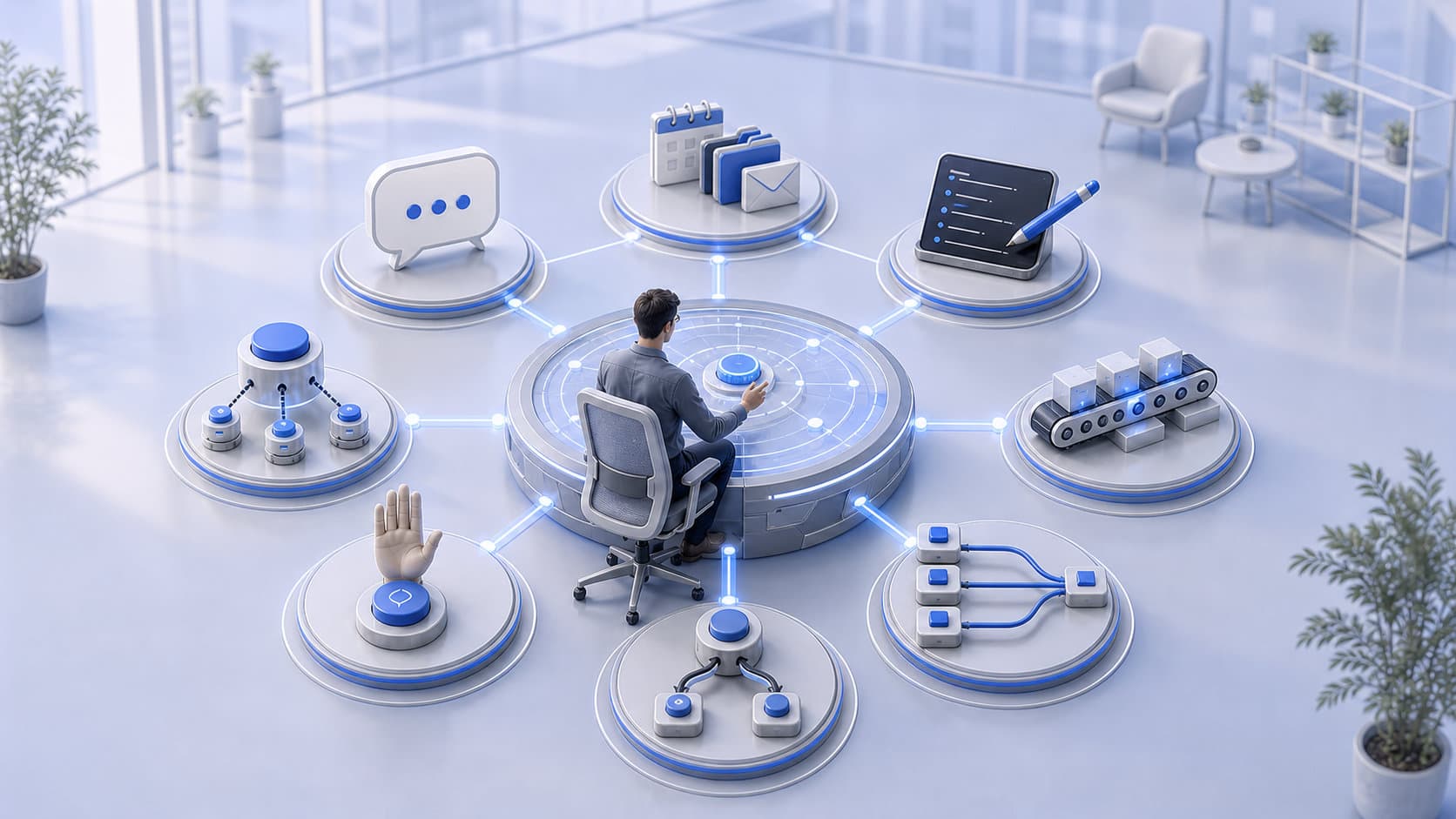
Picture a department where no person does the work. AI takes each task, completes it and returns a result, with no human in between. So who manages it? In a normal department, management sits inside people’s roles. Take the people out, and the deciding, planning, checking and learning still have to live somewhere. They move into written instructions for the AI, known as playbooks.
Departments built around people run on a hierarchy, in which an org chart sets each role and each level answers to the one above. A department run by AI needs the same shape. Basic, repeatable tasks sit at the bottom, and strategic management sits at the top, where four groups of instructions hold the structure together.
Strategy comes first. It means deciding what to do with the resources on hand. Those resources are fixed at any moment, so the real work is choosing which jobs to back and which to leave. The strategy instructions make the two calls a human leader would make: which work to take on, and how to approach each piece.
Execution comes next, because a decision counts for nothing if the work never gets done. Among people, this job belongs to project managers. In the AI version, a second group of instructions breaks each goal into pieces, hands out the parts and follows every part to the finish. Without that tracking, parts sit unfinished while the whole looks done.
Some responsibilities are not projects with a finish. Standing processes and recurring duties run on with no end date, so the check on them has to run on too. A third group of instructions watches the AI and confirms it still does its assigned job. When the output drifts from the standard, the monitoring catches the slip early.
A fourth group, for reporting and optimisation, closes the system. Strategy sets a direction, the work happens, and data comes back on what it produced. The reporting side sends that record back to the top. The optimisation side reads the data and adjusts the next plan. Each round builds on the one before, so the department sharpens its choices against real results.
The people leave, but someone still has to build the instructions, check them and keep them current.