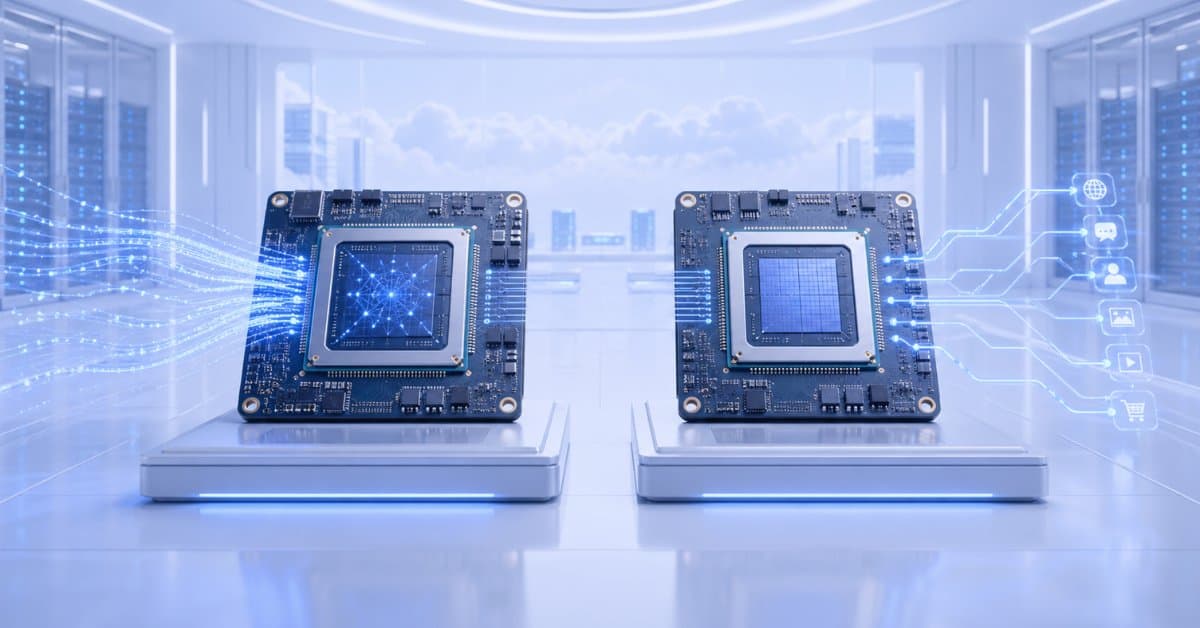
AI carries two big costs. Building a model takes vast computing power over long periods before it is ready for use. Running it costs money again every time a user asks a question, an app uses the model or an AI agent takes another step on a task. Google has built a separate chip for each cost.
The chips are TPUs, processors Google designs specifically for AI work as an alternative to general-purpose hardware. TPU 8t is for building models, a stage called training, and TPU 8i is for running them once they are built. As AI moves into products and operations, that second cost becomes harder to ignore.
Google first made its own chips for an economic reason. It said that by 2013, demand for AI had grown so fast that meeting it with existing systems could have meant doubling its data centers. More data centers need more land, power, cooling and equipment, along with higher operating costs. Better chips can deliver the same AI with less of that infrastructure.
The first TPU showed what specialization can do when the work is large and repeated. An early analysis found it delivered 15 to 30 times the performance of comparable general-purpose and graphics chips when running models. It also did 30 to 80 times more useful work per unit of electricity. Less wasted energy means lower operating costs.
On the building side, the company says TPU 8t delivers nearly three times the computing performance of the previous generation. By its account, the chip can cut the training of the most advanced models from months to weeks.
The deeper problem is waste. Chips become expensive when they sit idle, waiting for memory or for messages from other chips. Google’s approach keeps more useful work moving inside the system and cuts the delays between chips. That can mean faster products and a lower cost for each response.
TPU 8i targets the running side, where AI becomes a question of profit margins. It is designed for AI agents that work across products, apps and workflows. Google says TPU 8i does 80% more work per dollar than the previous generation. That figure affects how much AI a company can afford to run.