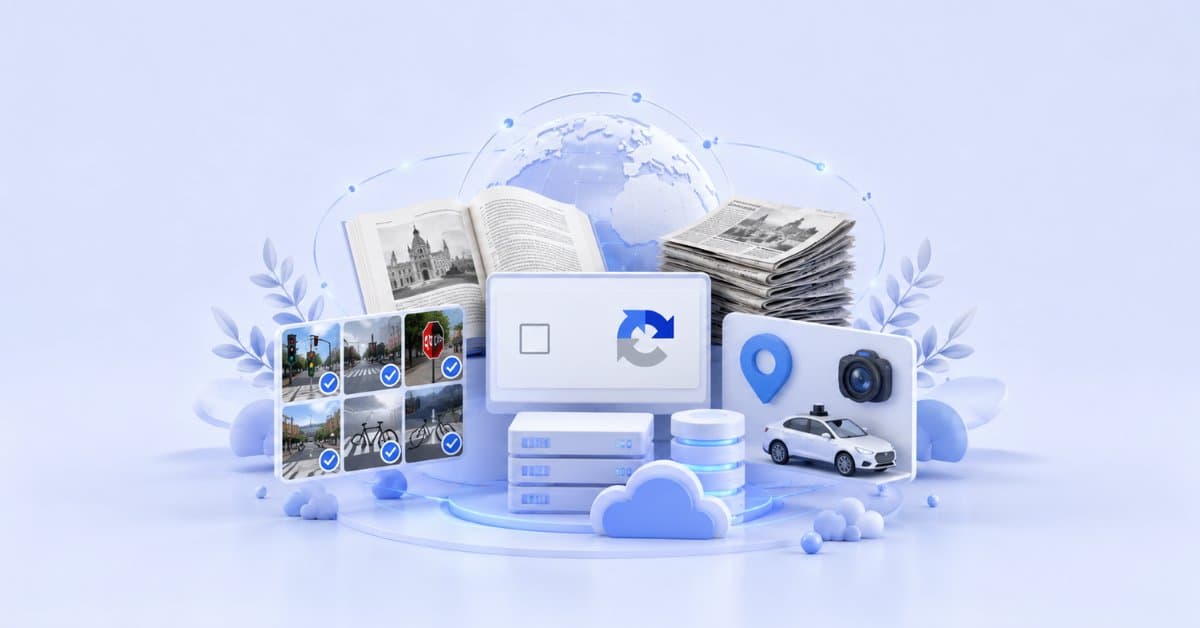
People who filled in reCAPTCHA, one of the internet’s most common security checks, thought they were proving they were human. After Google bought the system in 2009, many of their answers also became a quiet source of human input for teaching its computers to read.
The idea began at Carnegie Mellon University, where Luis von Ahn and his colleagues created the system in 2007. It was a new version of the familiar online test that asks people to read distorted words. Each check showed two words. One was already known and served as the test, while the other came from scanned text that software could not read. The university introduced the project with the line “Stop Spam. Read Books.”
If a person typed the known word correctly, the system trusted their answer to the unknown word more. The same unknown word was then shown to other people. When enough of them gave the same answer, the system accepted it as the correct reading.
Scale made the system valuable. Von Ahn later said that around 200 million of these tests were typed every day, each taking about 10 seconds. That added up to about 500,000 hours of human effort a day.
Google’s own announcement of the purchase said the technology would help improve the scanning behind Google Books and Google News Archive Search. The New York Times archive shows how far the system reached. A profile from MIT’s Lemelson programme says it helped turn more than 13 million of the paper’s articles, dating back to 1851, into digital text. It also helped digitise around two million books a year from the Google Books project.
People who had been typing old words later helped computers interpret real-world images. In 2014, Google said that technology from its Street View and reCAPTCHA teams helped read street numbers and connect them to addresses in Google Maps.
AI systems learn from examples that people have identified, known as labelled data. Every time people picked out a street sign, an address or an object to prove they were human, they also gave Google a small piece of it.