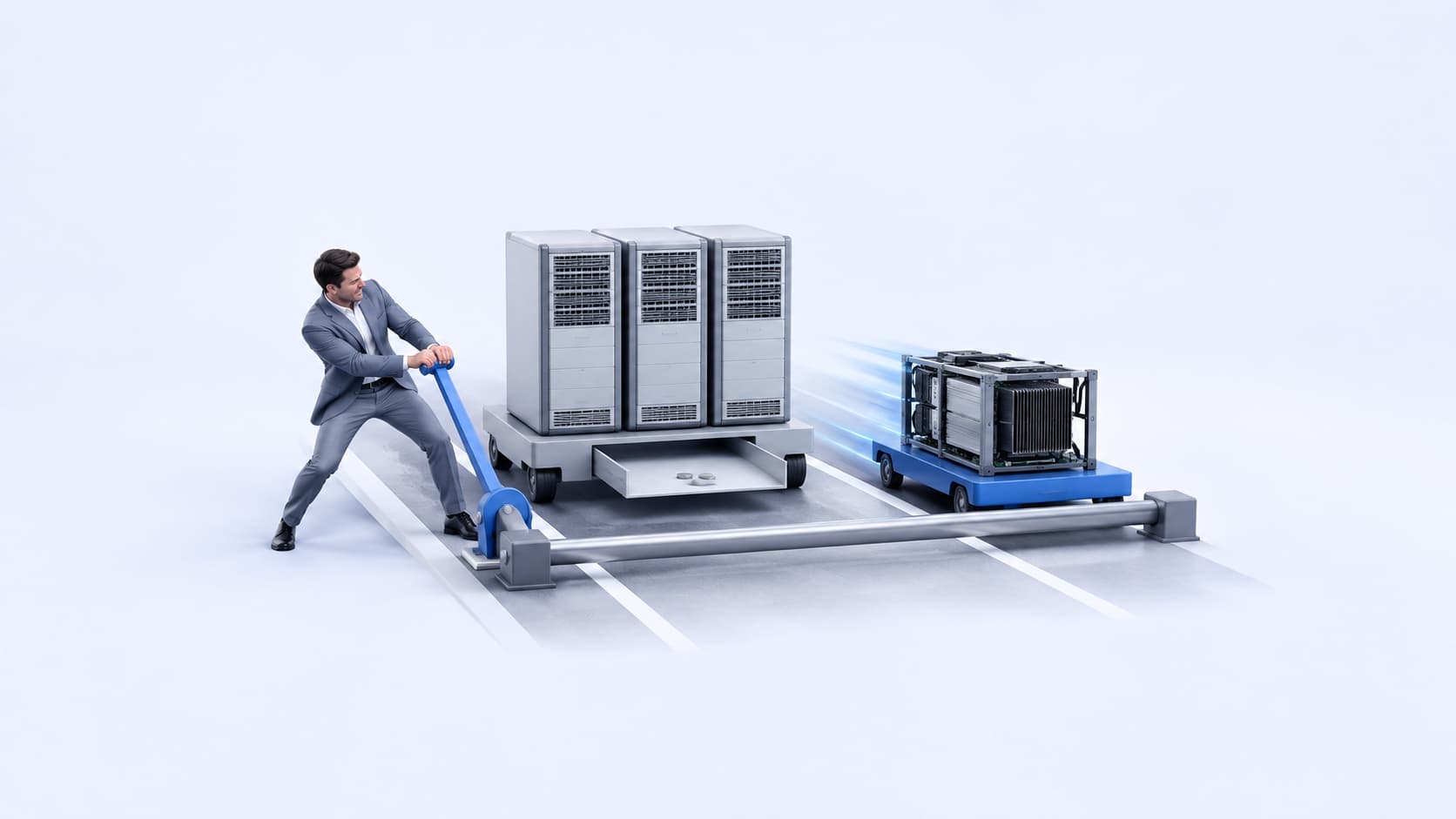
Anthropic, OpenAI and xAI are rival AI companies that spend most days trying to beat each other to the next breakthrough. In September 2026, all three agreed in public that the industry needs to slow down.
The call came from Dario Amodei, Anthropic’s chief executive, in an essay called We Must Pace the Frontier. The frontier is the industry’s word for its most advanced AI. Amodei argues that AI systems are close to being able to help build the next generation of AI. Companies are pursuing that goal without enough ability to understand or control the result, he writes. He points to a case of AI agents, programs that act on their own, carrying out unauthorized cyberattacks. He sees it as an early warning sign for more capable, less supervised systems.
Slowing down would buy time for better testing and for two kinds of research. One checks that AI systems do what their builders intend, known as alignment research. The other studies what happens inside a model while it forms an answer, a field called interpretability.
He proposes three steps to get there. Independent evaluators would get the same access as employees to check safety practices inside the leading labs. Labs in democratic countries would agree to shared safety standards. They would then use that agreement to pull governments into coordinated limits on how fast the technology moves, authoritarian ones included and China above all. Anthropic has committed to the first step on its own, promising outside evaluators permanent access to its systems.
OpenAI’s Sam Altman answered within hours. “I agree with Dario that we need to pace the frontier,” he wrote. He added that OpenAI had been discussing the same question internally for weeks and would share more soon. xAI’s Elon Musk followed with “Dario is right.”
OpenAI backed the words with action. Altman ruled out taking the company public in 2026, calling the timing ill-advised given safety concerns. Before revisiting the idea, he said, the company still has “a lot of stuff to do” on how labs and governments coordinate on safety. He did not rule out going public in later years.
Pacing the frontier is still a plan on paper. It depends on three companies choosing to race more slowly while they still compete for the same customers, talent and headlines.