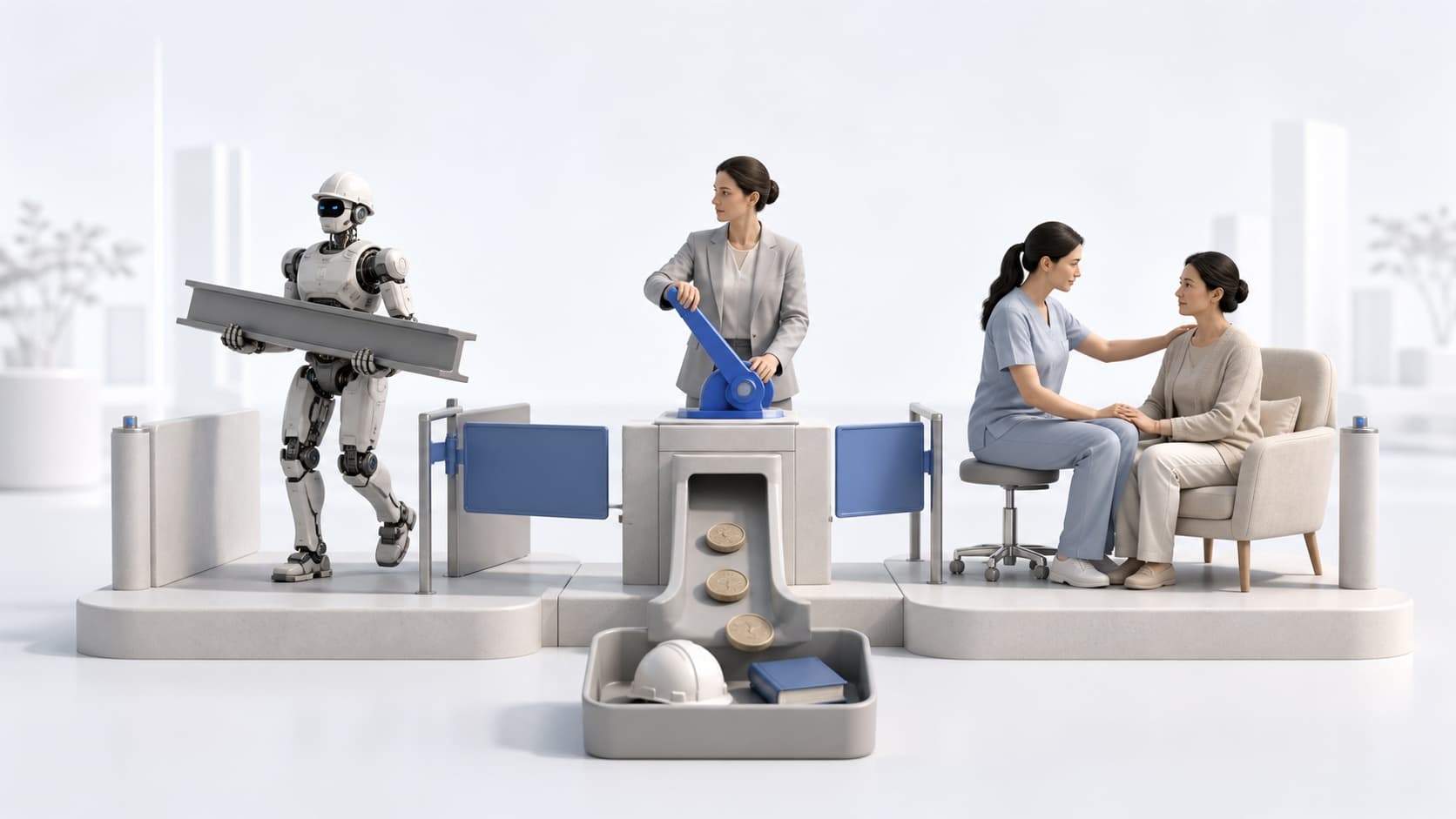
Picture a company with 1,000 employees, most of them junior. An AI company pitches an agent, software that does a junior employee’s work for a fifth of the cost. Several rivals fire most of their junior staff within weeks, but this company holds back. Its leaders treat the software as a tool, so a person signs off on all its work.
Within months, the agents beat most of the human staff, even with every output checked. That would not surprise researchers who track AI performance. A March 2025 study by METR, a nonprofit that tests AI systems, measured tasks by how long they take a skilled human. The length of tasks AI models could finish alone doubled roughly every seven months from 2019 to 2025.
A reviewer adds value only while the agent is weaker than a person, by catching mistakes it would otherwise make. Doubling at that rate, the agent does not stay weaker for long, and once it is stronger, the check adds delay and little quality. The best teams already let the agent finish a task, then click approve. On the routine work junior staff used to do, the human check now only slows things down.
Each week, more routine work moves to the agents, so productivity climbs, but the wage bill does not fall to match. Directors start asking why the company still pays staff who add less value than the software. The chief executive keeps them anyway, mainly because mass firings would look bad in public.
The reprieve lasts one quarter. Earnings come in higher than the year before, but in this market they only count against what rivals earned that same quarter. Competitors who removed junior staff entirely report even higher earnings on much lower costs. Next to them, merely doing better looks like falling behind, and the stock price drops.
After the drop, the board delivers an ultimatum: cut the junior staff whose work trails the agents, or make way for a replacement who will cut them all. Leaving would mean losing any say in the cuts, so the chief executive agrees to cut half of them.
The company is invented, but the trend behind it was measured, though six years of data guarantee nothing about the years ahead. Caution changed how fast the cuts came and how many jobs survived them, but the cuts still came.