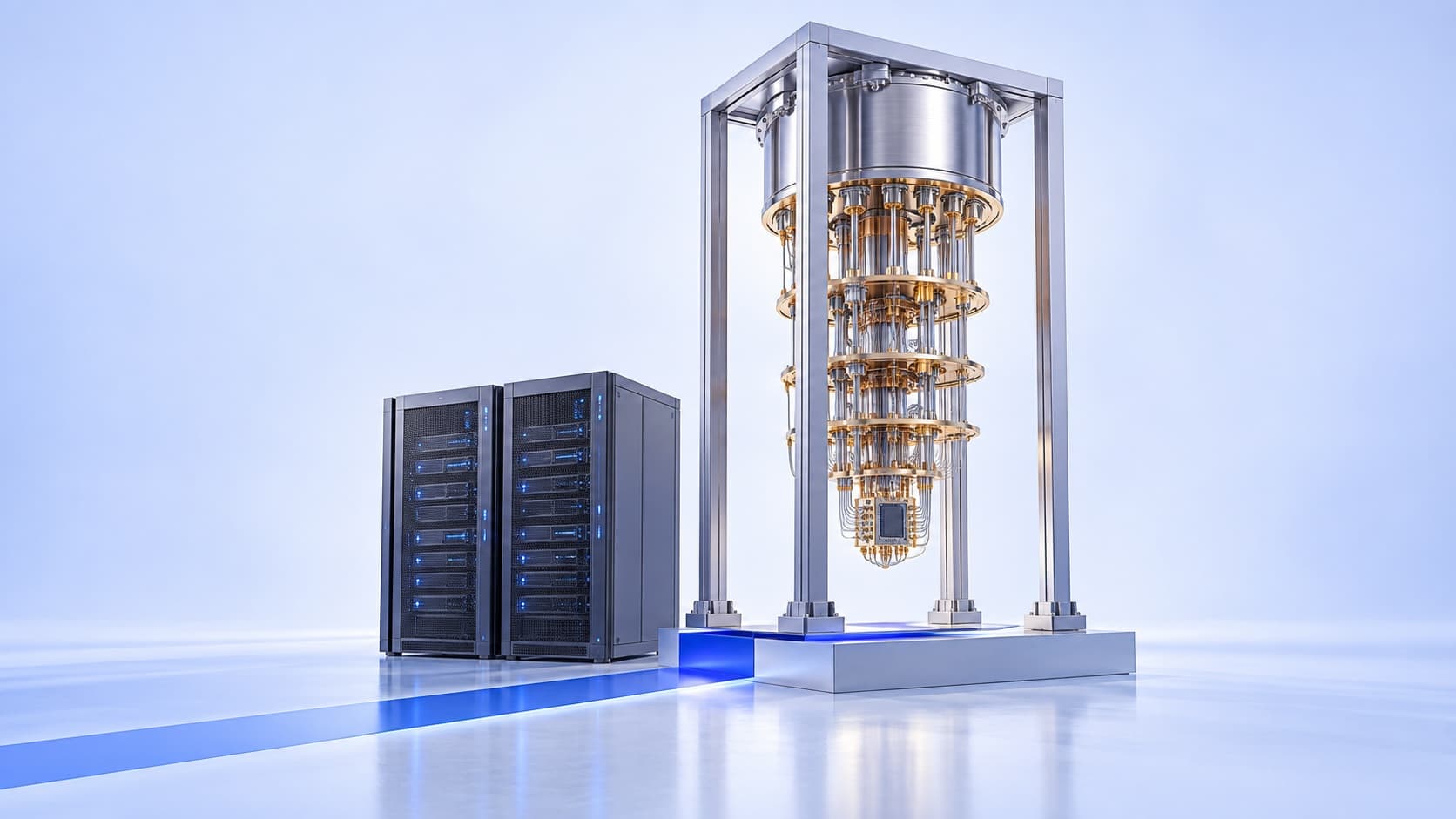
Intel’s CEO thinks quantum computing could be 10 times bigger than AI. Lip-Bu Tan said so on the QuantumJane podcast and placed quantum computing inside Intel’s strategy for the next five to 10 years. Working quantum computers could create a new hardware cycle before the AI boom finishes.
The technology sounds impossible at first. Ordinary computers run on bits, tiny switches set to 0 or 1. A quantum computer uses units that can hold 0 and 1 at the same time, called qubits, so a quantum system holds many possibilities at once. NIST, the US standards agency, says a capable enough quantum processor would sift through many possible solutions simultaneously and zero in on the correct answer quickly.
A Google chip called Willow offers a test case. In a December 2024 post, Google said the chip finished a standard test calculation in under five minutes. By its estimate, one of the world’s fastest supercomputers would need 10 septillion years for the same task. That is a 1 followed by 25 zeros, longer than the age of the universe. Even so, Google expected ordinary computers to keep improving on the test, which had yet to show a commercial use.
Commercial use is the expected payoff, which is why billions of dollars have gone into quantum computing. The machines are expected to deliver new medicines, better superconductors and new materials. Designing new drugs and materials depends on understanding how matter behaves at the scale of atoms, which ordinary computers find hard to model. IBM expects quantum computers to address that problem over the long term. Tan names chemistry and medicine as fields where quantum computing could eventually prove its value.
Holding many possibilities at once also creates a security risk. Encryption keeps confidential information away from unauthorized viewers. Q Day, the day a quantum computer becomes strong enough to break it, would expose banking, messaging, medical records, money and classified intelligence. No one knows when that machine will arrive, and expert estimates run from a few years to a few decades. NIST describes the field as still in its infancy.
Tan calls the verdict undecided and says quantum computing’s scale depends on three tests: the application, the accuracy of the results and whether they repeat. The Willow post named the challenge Google had not yet met, a calculation useful in the real world that ordinary computers cannot do.