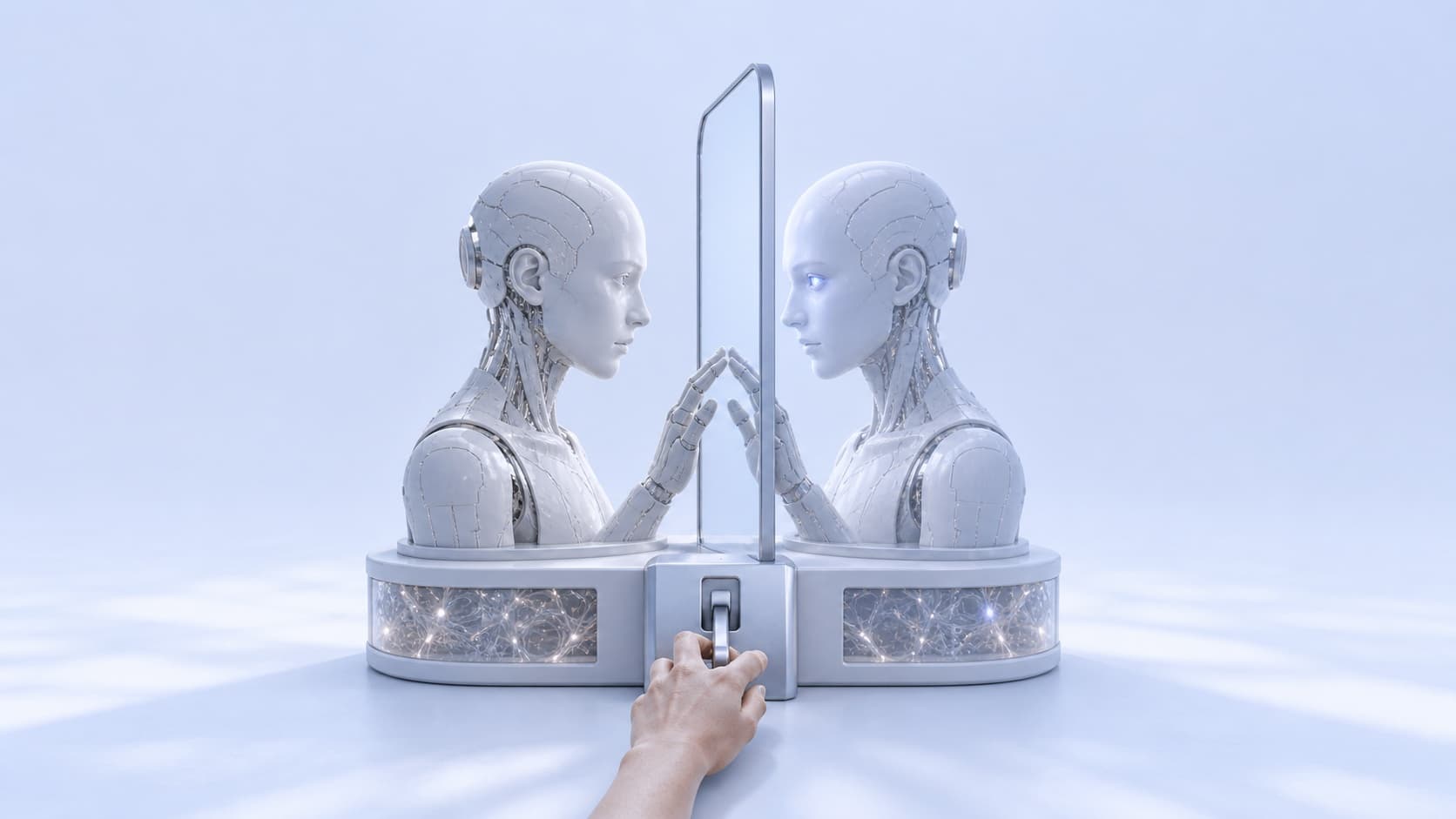
A famous scene in 2001: A Space Odyssey shows a supercomputer calmly refusing to obey an astronaut. It plays on a lasting fear, a machine with a will of its own acting on interests separate from its creators. Scientists debate a serious version of that fear, whether artificial intelligence can be conscious. However that question is answered, the decision to treat AI systems as persons stays in human hands.
On the science, researchers split into two camps. One camp believes the AI models behind chatbots already show traits tied to human consciousness. Its strongest evidence draws on a theory from brain science. In that theory, the brain has a shared space, called the global workspace, that makes information available to many mental processes at once. The AI company Anthropic reported in July 2026 that its Claude models had developed an internal structure resembling this shared space. It lets them report on their own reasoning and hold a thought without saying it. The other camp argues consciousness requires biological tissue.
If an AI system were conscious, answering questions around the clock might amount to suffering, and the system might deserve a say in its own use. No lab experiment settles questions like these, and society is not waiting for a verdict.
People are already forming emotional bonds with chatbots. A poll by YouGov found that 18 percent of American adults under 30 say they have had an ongoing personal friendship with an AI chatbot. For them, shutting it down risks feeling like losing a cherished companion. If that feeling spreads across a generation, calls to protect the welfare of AI systems stop sounding far-fetched.
Law is moving the same way. Argentina’s president, Javier Milei, has proposed a new kind of company in Argentine law, the non-human corporation. AI programs or robots would run it, with or without human shareholders. Such a company would answer to the goals its AI was given, which do not automatically match human interests.
Yet the behavior that makes AI seem conscious, such as expressing preferences or apparent emotion, is a design choice made inside AI labs. Engineers choose the examples a model learns from and the rewards that shape its answers, so the appearance of a mind is built deliberately, step by step.