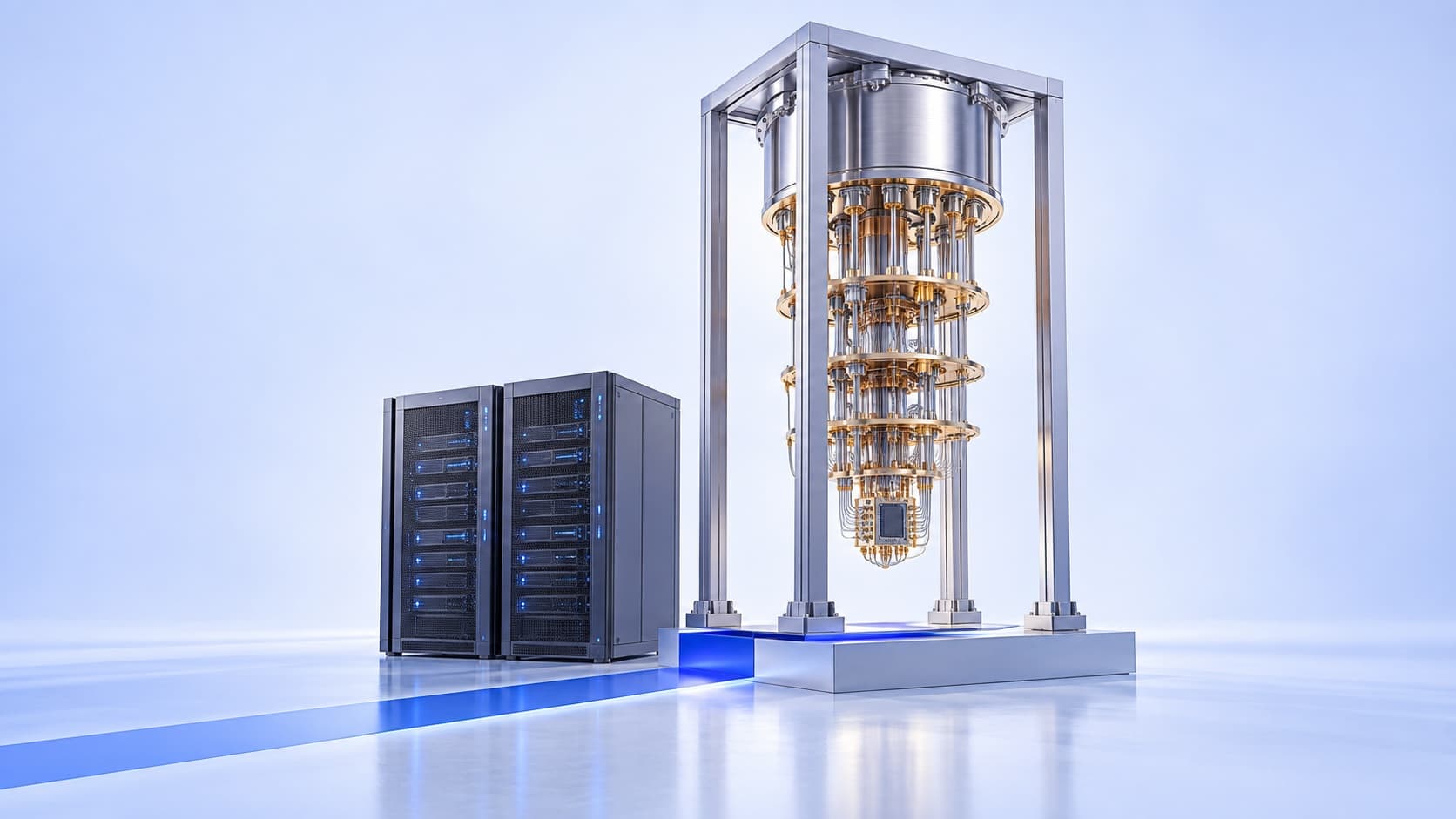
A quantum computing company claimed that one physics problem could be solved only by a quantum computer. Physicists at the Flatiron Institute set out to test that claim. Months of work later, the problem ran on a personal laptop.
D-Wave made the claim in a paper published in the journal Science in March 2025. Its quantum computer had simulated how hundreds of qubits, the quantum version of the bits inside a regular computer, behave over time as they interact. The company said it finished the hardest version of that simulation in minutes. Matching that accuracy on a supercomputer at Oak Ridge National Laboratory, it said, would take close to a million years.
Joseph Tindall, who led the Flatiron study, doubted the “impossible” part. “Whenever we see these kinds of claims, we’re always a bit skeptical,” he said. His colleague Miles Stoudenmire said the paper made a better test of the team’s tools than an arbitrary target, because it came with a specific, checkable claim.
Qubits are hard to simulate because they stay linked once they interact, however far apart they later sit. A simulation therefore has to describe the whole system together, and each added qubit roughly doubles the size of that description. By the time a system reaches hundreds of qubits, Tindall said, it is too large to store directly on a computer.
Tindall compares the team’s fix to a zip file. It packs the system into a web of small, linked tables of numbers that capture how the qubits behave as a group. Paired with a 1980s shortcut that trades some precision for speed, the compressed system was light enough to run on ordinary hardware.
The team’s findings appeared in Science on May 21, 2026. On smaller test cases, where the right answer is already known, the simulations matched it. They also lined up with the results D-Wave had reported from its quantum computer. No quantum hardware went into producing them.
Neither physicist calls quantum computers pointless. Both say the two approaches feed each other, since code written for ordinary computers sets the bar a quantum computer has to clear. The ordinary side is also easier to enter, Tindall said, because matching a result takes nothing more than writing code and pressing run on a personal computer.