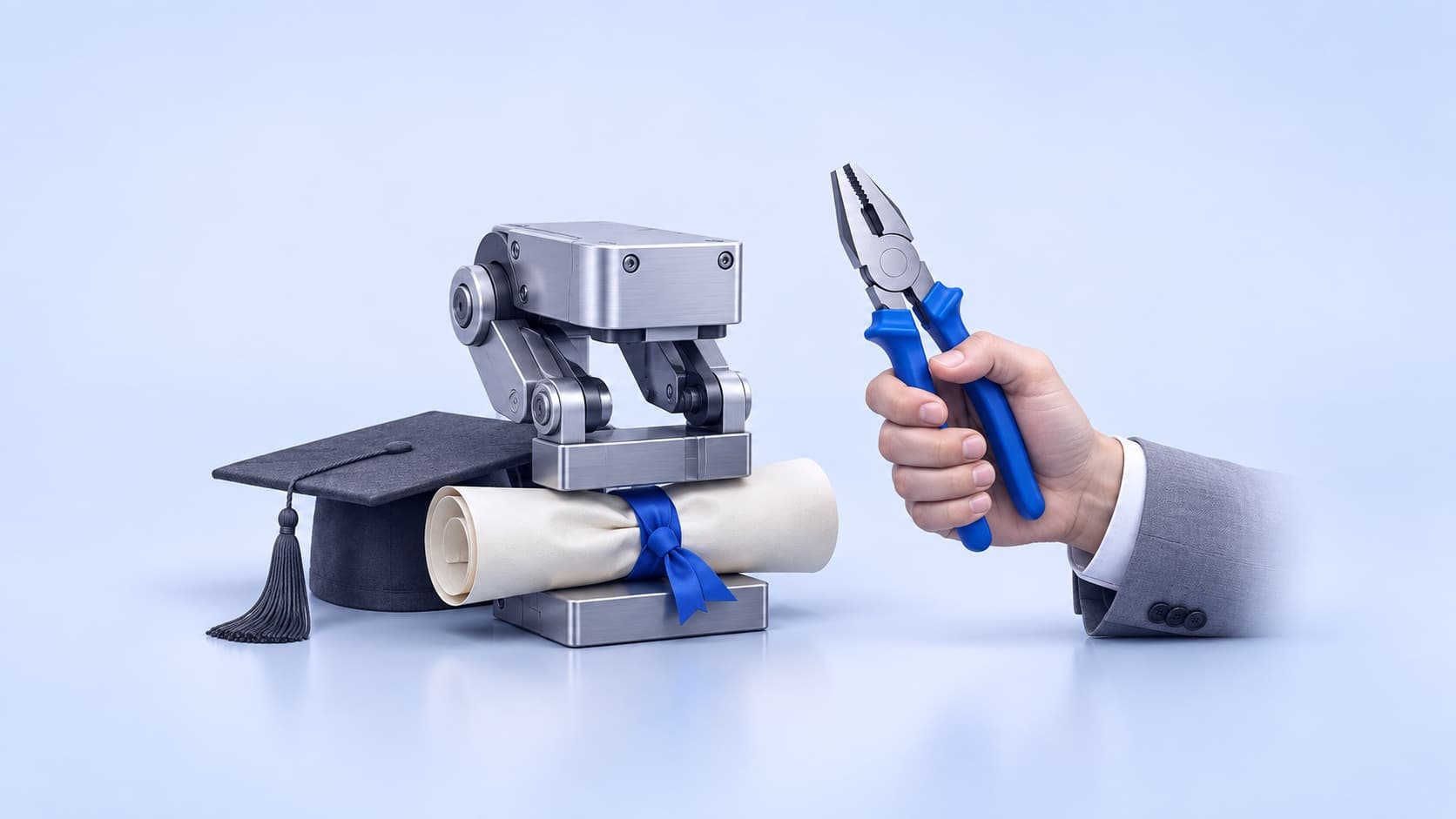
Companies still want people. They need fewer of them at entry level, and the ones they keep will know how to multiply their own output using AI. That skill carries a premium. Arun Sundararajan, a professor of entrepreneurship at New York University’s Stern School of Business, tells his students to prepare for that. On the World Economic Forum’s Radio Davos podcast, he said the students already ahead are building something concrete before graduation. They do not wait for a diploma to speak for them.
Those early projects turn into a portfolio, proof of what a person has built. A resume states claims about a person. A portfolio shows the work itself, which a hiring manager can see instead of taking on faith.
Sundararajan ties the habit to age, not talent. Build it between eighteen and twenty-two, he said, and the payoff compounds well past graduation. Every finished project builds a kind of muscle, the ability to take on unfamiliar work and adjust without a manual. That muscle outlasts any classroom skill, because the tools and tasks around a graduate will keep shifting after the degree is done.
Taking a project from a blank page to a finished result draws on the same practice as directing AI tools toward real output. So a graduate who spent college building things arrives already practiced at that kind of self-directed work.
His other advice is about people. Connections carry more weight than before, he said, and college is the easiest place to build them. A student can walk up to almost anyone and ask to learn from them, a request most people are happy to grant. After graduation, the same request becomes an ask for time from someone with no obvious reason to agree. Student status runs out the day the degree is handed over, which is why he tells his students to invest heavily in relationships, starting now.
Sundararajan is wary of certainty, including his own. Anyone who claims to know exactly which jobs AI will erase should not be taken too seriously, he said. The same goes for claims about the job market over the long run.
Asked whether this generation risks being lost to AI, he answered both ways. Some students will find the uncertainty overwhelming, he said, while others will look back in ten years and call this a period of real opportunity.